Select Language:
A research team from the Center for Excellence in Molecular Cell Science at the Chinese Academy of Sciences has successfully transplanted stem cell-derived islets into multiple patients with diabetes, opening up new possibilities for treatment and addressing the limitations of traditional islet cell transplants caused by donor shortages.
Collaborating with Shanghai Changzheng Hospital, the team performed regenerative islet transplant procedures using both autologous and allogeneic stem cell-derived islets on three individuals diagnosed with type 1 diabetes. This advancement was recently published in The Lancet Diabetes & Endocrinology.
Type 1 diabetes is a lifelong condition marked by the immune system attacking insulin-producing beta cells in the pancreas, resulting in critical insulin deficiency. It often develops during childhood or adolescence, requiring patients to depend on insulin injections throughout their lives to control blood sugar levels. Currently, the only definitive cure involves obtaining islet cells from a deceased donor’s pancreas, which is not always feasible for many patients.
This study is the first worldwide to demonstrate that transplanting stem cell-derived islets—whether from the patient’s own cells or from a donor—can restore pancreatic function and enable natural blood sugar regulation in type 1 diabetes patients. According to a recent report, during a press conference presenting the findings, the treatment resulted in sustained improvements in blood glucose control and effectively minimized the development and progression of diabetes-related complications.
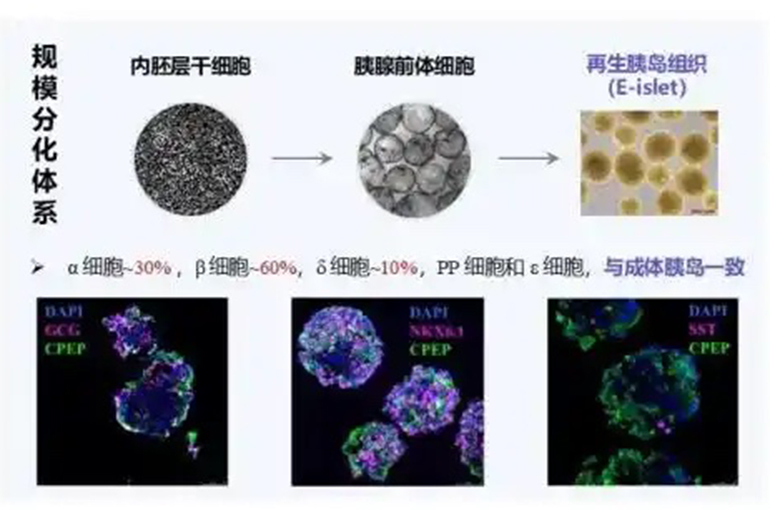
To overcome the challenge of limited donor organs, the team developed a method to grow islets in the lab from endodermal stem cells. They also created E-islet, an artificial islet solution that can be delivered through the portal vein to transplant lab-grown islets into patients.
E-islet received approval for clinical trials in China last April and in the United States this January. The clinical testing is progressing steadily and without major issues.
 ChatGPT
 Perplexity
 Gemini AI
 Grok AI