Select Language:
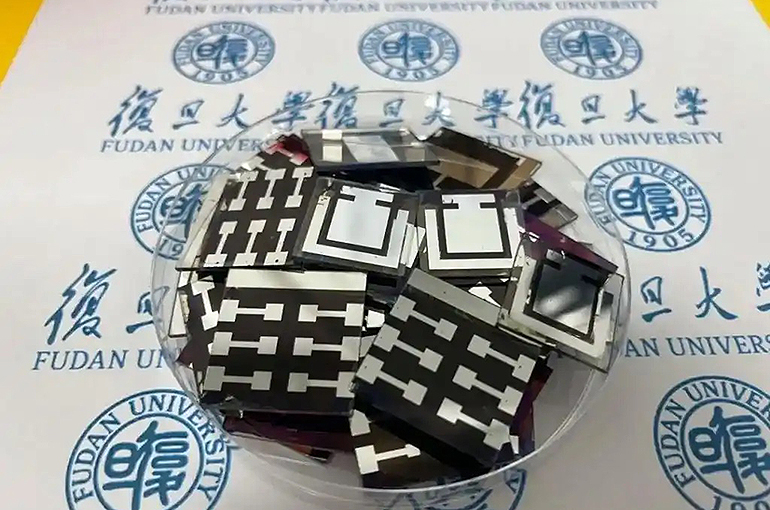
A team of scientists in Shanghai has developed a groundbreaking perovskite solar cell that replaces toxic lead with tin, significantly reducing environmental hazards while improving efficiency. Their tin-based solar panel currently boasts the highest known power conversion rate for its kind at 17.7%, according to a recent publication in a prominent UK scientific journal. Previously, tin-based cells faced challenges reaching 10% efficiency due to the metal’s unstable properties.
Perovskite solar cells are viewed as the next evolution in photovoltaic technology because they promise higher efficiency and lower manufacturing costs. However, their reliance on lead has raised serious health and environmental concerns, limiting their widespread adoption.
The researchers aimed to create a truly eco-friendly solar cell that remains sustainable throughout its entire lifecycle. Tin was chosen as a promising alternative because it is abundant, safe, compatible with solar energy conversion, and easy to produce on a large scale. To counteract tin’s instability issues, the team redesigned the interface within the solar cells by adding a molecular film, establishing a uniform interfacial layer that aligns energy levels efficiently. This innovative approach created a “superwetting” underlayer, which directs the growth of consistent, high-quality tin-based perovskite films with fewer defects.
Looking forward, this environmentally friendly photovoltaic technology is expected to see widespread application in various fields, including building-integrated solar systems, wearable energy devices, vehicle rooftops, and off-grid clean power solutions.
 ChatGPT
 Perplexity
 Gemini AI
 Grok AI