Select Language:
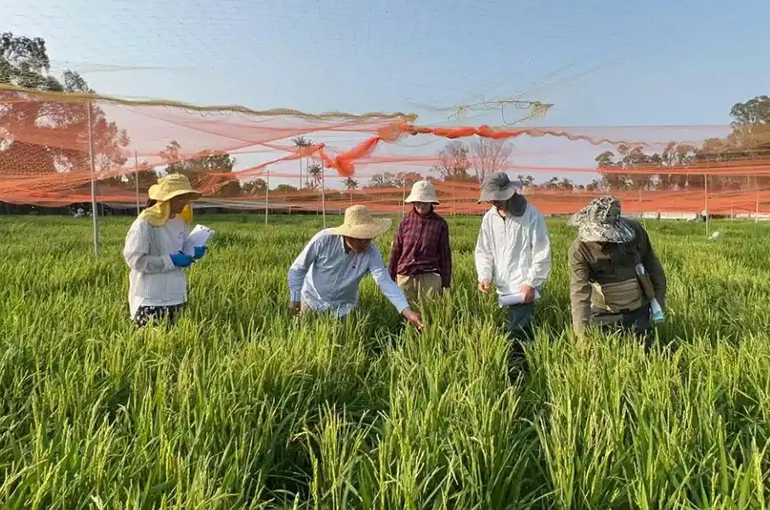
After two decades of research, scientists in China have uncovered the immune mechanism that allows certain rice varieties to resist bacterial blight. This breakthrough provides a foundation for breeding rice strains that are both highly productive and resistant to disease.
A collaborative effort involving the Center for Excellence in Molecular Plant Sciences at the Chinese Academy of Sciences, Shanghai Jiao Tong University, and Zhejiang University identified the rice gene Xa48. They revealed how this gene activates the plant’s immune response against bacterial blight.
Published recently in a leading scientific journal, the research offers critical insights and technical guidance for developing new rice varieties that blend strong disease resistance with high yields.
Bacterial blight, caused by the Xanthomonas oryzae bacteria, is a major threat to rice production, especially in coastal, lakeside, and flood-prone lowlands. It ranks among the most destructive plant diseases worldwide, capable of reducing yields by more than 70 percent.
Over the past twenty years, the occurrence of bacterial blight in China has increased, spreading across nearly all rice-producing regions due to changing climate conditions and more frequent extreme weather events.
The study discovered that the Xa48 gene is predominantly found in rice subspecies cultivated in the southern Yangtze River area, where bacterial blight outbreaks are more common. Conversely, it is absent in northern rice subspecies, which experience fewer floods. This finding has significant implications for rice breeding strategies.
Researchers also created a new rice variety by combining the Xa48 gene with another resistance gene, Xa21. The results confirmed that stacking these genes can produce a broad-spectrum resistance similar to that of wild rice. This enhanced resistance remains stable even during severe conditions such as typhoons and floods, without lowering crop yields.
This research has already been put to use by several breeding firms and research organizations, including Yuan Long Ping High-Tech Agriculture, Winall Hi-Tech Seed, the China National Rice Research Institute, and the Chinese Academy of Agricultural Sciences.
 ChatGPT
 Perplexity
 Gemini AI
 Grok AI