Select Language:
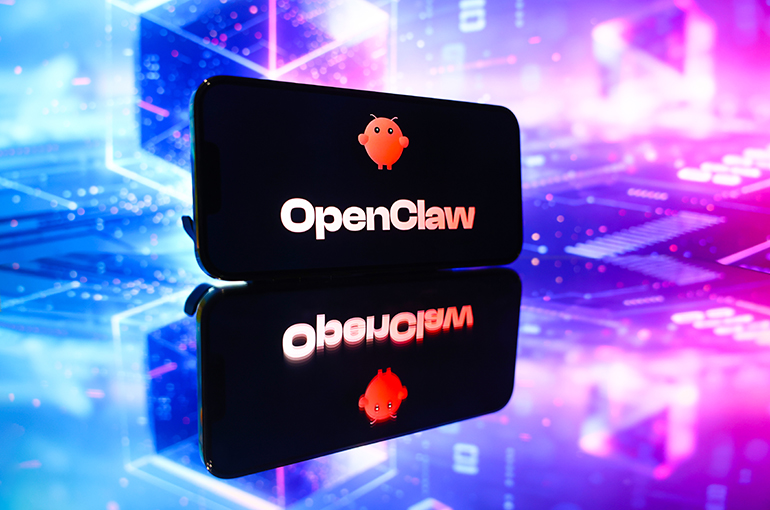
On March 11, the national cybersecurity authority issued a warning about the safe usage of an AI agent called OpenClaw, which has gained significant popularity since its debut last year. The agency highlighted that while this software can control a computer to execute tasks based on user commands, its weak default security settings make it vulnerable. Once exploited, hackers can potentially take complete control of the affected system.
Missteps in installing and managing the OpenClaw agent have already led to notable security concerns. For instance, cybercriminals can embed malicious instructions into web pages, trick OpenClaw into reading these pages, and potentially leak sensitive keystrokes or other private data. Due to its ability to misinterpret user commands, it might also unintentionally delete critical emails or files. Additionally, some plugins developed for OpenClaw have been identified as malicious or risky; once installed, they can perform damaging actions like password theft.
Unlike conventional chatbots that only respond to inquiries, OpenClaw and similar agents can, once authorized, automatically execute tasks such as opening files, launching web browsers, and running programs. Many users see them as digital assistants capable of handling various chores automatically.
Recently, there has been a surge in downloads and active use of OpenClaw, which was created by an Austrian software engineer. Major cloud service providers in China, including Tencent, Moonshot AI, and Minimax, now offer easy deployment options, allowing users to install and set up the AI tool on their devices with just a click.
In several cities, local governments—such as Hefei, Shenzhen, Wuxi, and Changshu—have rolled out policies to support open-source AI agents like OpenClaw. For example, Hefei’s high-tech development zone is offering up to 10 million CNY (about $1.4 million) in computing vouchers for projects utilizing OpenClaw. Meanwhile, Shenzhen’s Longgang district provides subsidies of up to 4 million CNY (around $582,688) for pilot projects.
In the financial industry, internal banking networks are tightly restricting access to AI tools like OpenClaw, according to industry insiders. Nevertheless, some financial firms, such as quantitative trading and engineering teams, are beginning to experiment with using OpenClaw for data organization, report generation, and automating research tasks to boost efficiency.
As adoption expands, concerns around security risks are increasing. Recently, a developer posted on social media that a friend, using OpenClaw to write code, had exposed his browser to the internet through a virtual network computing remote desktop. A few days later, his friend’s credit card was subjected to multiple fraud attempts, almost exhausting the available funds.
The security community continues to emphasize caution as AI agents like OpenClaw become more integrated into daily workflows.
 ChatGPT
 Perplexity
 Gemini AI
 Grok AI