Select Language:
China recently attempted to recover the first stage of a reusable carrier rocket for the second time this month, but once again, the effort was unsuccessful. Experts in the industry note that this failure is unlikely to alter the ongoing trend of developing reusable rockets as the future standard in aerospace technology.
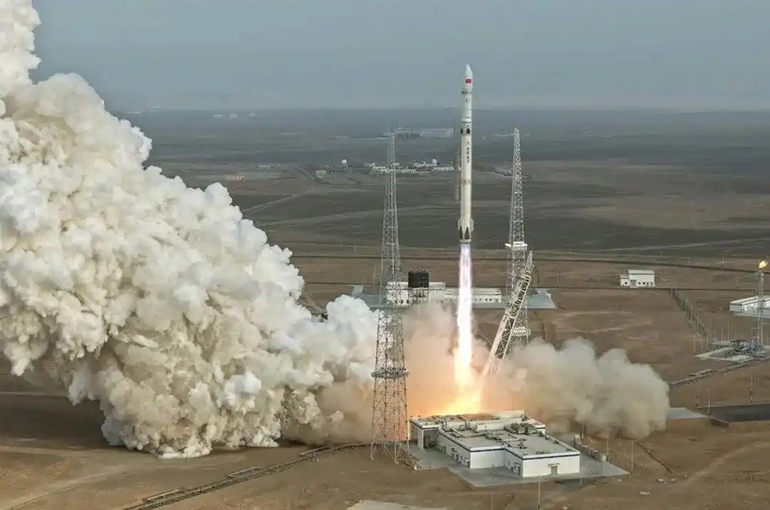
Today, a Long March-12A Y1 rocket was launched from the Jiuquan Satellite Launch Center in northwest China. While the second stage successfully delivered its payload into the designated orbit, the first stage was not recovered, according to official sources.
This rocket, created by the Shanghai Academy of Spaceflight Technology under the China Aerospace Science and Technology Corporation, is a reusable variation of the Long March-12, currently China’s most powerful single-core rocket. It can carry at least 12 tons to low Earth orbit and over six tons to a sun-synchronous orbit at 700 kilometers altitude.
Despite the failed recovery of the first stage, the mission yielded valuable engineering data under actual flight conditions. This information is vital for improving future launches and recovery efforts, according to a government social media post.
The development team plans to conduct a comprehensive review of the mission, focusing on identifying the cause of the failure, refining recovery strategies, and advancing reusable technology tests.
As technology advances and factors like cost, launch efficiency, and commercial demands are considered, reusable rockets are expected to become the standard design for next-generation vehicles. It is likely that every new expendable rocket will also have a reusable version planned alongside it.
Failures in recovering rockets are a natural part of the testing process, one engineer noted. The important thing is turning these setbacks into practical lessons that propel technological progress.
Earlier this month, a private aerospace company successfully conducted its first flight of the Zhuque-3 reusable rocket. While the second stage reached its target orbit, the first stage was not recovered during that mission.
 ChatGPT
 Perplexity
 Gemini AI
 Grok AI