Select Language:
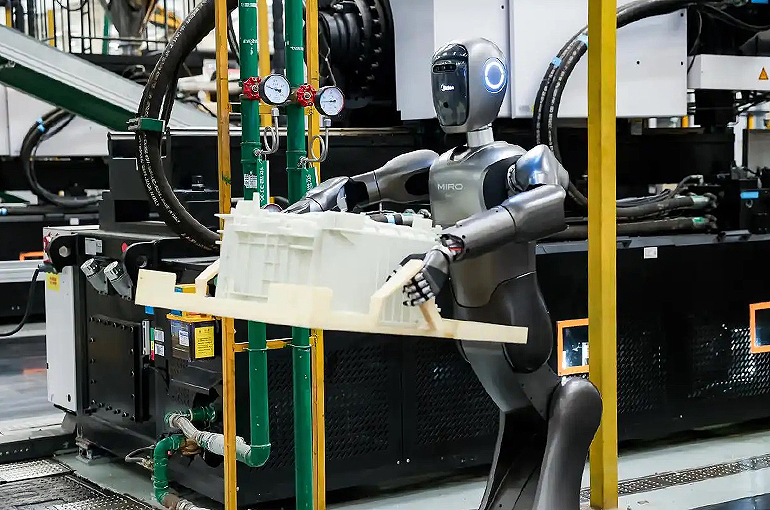
After two years of testing large language models in fields like translation, document processing, and human resources, China’s manufacturing industry is now integrating AI directly into production lines, where it can significantly influence costs and efficiency.
The digital division of a major home appliance manufacturer introduced a suite of industrial AI agents yesterday, along with its new Meiking AIGC 3.1 platform. During the event, the division’s president stated that the company aims to reduce expenses by approximately CNY900 million (USD129 million) through AI applications this year.
The over 40 industrial AI agents launched publicly were selected from tens of thousands already used internally by the company. This enterprise has now implemented large-scale AI solutions across 158 key business areas, including research and development, manufacturing, supply chain management, quality assurance, logistics, finance, human resources, and international services.
For instance, on the production line, multiple AI agents monitor losses. Previously, losses caused by machinery breakdowns or quality issues had to be manually tracked every few hours, making it hard to identify root causes swiftly. With AI agents, daily losses are now analyzed at a granular level, pinpointing specific processes and roles, and offering targeted suggestions for improvement.
In supply chain management, where diverse suppliers and materials pose risks of sudden disruptions like typhoons, AI agents can quickly evaluate the potential impact and suggest alternative sourcing options.
The company has also integrated AI agents into human resources and legal departments to support resume screening, campus recruiting, and contract review processes.
In some cases, AI-driven solutions can cut costs by up to 90%, the president said. The cost savings from AI implementation have grown from roughly CNY40 million (USD574,000) in 2023 to about CNY180 million in 2024. These savings are projected to reach CNY600 million (USD86 million) in 2025, increasing further to CNY900 million this year.
However, expanding industrial AI further, especially among small and medium-sized businesses, remains challenging.
“Companies need to strengthen their digital foundations before adopting large-scale AI,” he explained. “The effectiveness of AI relies heavily on the level of business engagement and the quality of foundational data. Weak digital infrastructure or incomplete data can undermine results.”
In areas like sales forecasting and production planning, companies may appear to be using conventional systems, but AI increasingly supports decision-making behind the scenes, reducing the need for human intervention. Ultimately, AI will be embedded inside operations, not just accessible through a chat window.
 ChatGPT
 Perplexity
 Gemini AI
 Grok AI