
Select Language:
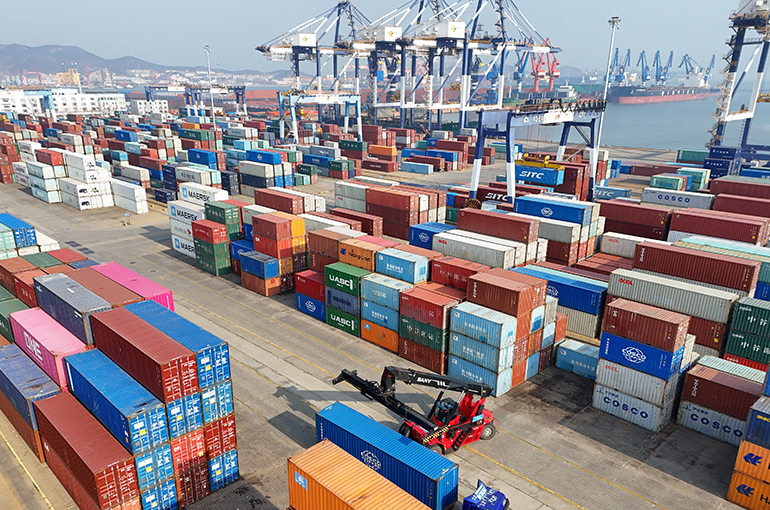
In July, China’s exports exceeded expectations as companies hurried to ship goods before increasing US tariffs and sought to move production abroad to avoid escalating trade barriers.
Foreign trade grew by 6.7 percent compared to the same period last year, with exports rising by 8 percent and imports increasing by 4.8 percent, marking the second consecutive month of import growth, according to data released yesterday by the General Administration of Customs.
For the first seven months of the year, China’s total trade in goods reached 25.7 trillion yuan (about 3.6 trillion USD), up 3.5 percent year-over-year. Exports expanded by 7.3 percent, while imports declined slightly by 1.6 percent.
The exports’ stronger-than-expected growth was mainly driven by increased shipments to markets outside the US amid the threat of new tariffs. The 90-day delay imposed by the Trump administration on increasing tariffs for Chinese goods is set to expire on August 12. Additionally, yesterday, the US president announced reciprocal tariffs ranging from 10 to 41 percent on multiple countries and regions, along with a 40 percent “transshipment tax” targeting goods passing through third-party countries.
Feng Lin, a senior executive at a prominent credit rating agency, stated that China’s export momentum is likely to slow down this month due to mounting tariff pressures. He emphasized the need for additional policies to support growth and stabilize foreign trade in the coming months, including targeted financial aid for exporters facing difficulties.
The analyst also noted that Chinese exporters are front-loading orders, a trend observed in South Korea and Vietnam, which are also key players in global trade. Both nations experienced accelerated export growth in July, primarily driven by advance orders. As the world’s largest trading country, China is witnessing a shift where manufacturers are increasingly relocating production overseas to mitigate tariffs on Chinese goods, Feng added.
In July, exports to the European Union increased by 9.2 percent, up from a 7.5 percent rise in June. Shipments to South Korea grew by 4.6 percent, reversing a previous decline, while exports to Taiwan surged by 19.2 percent compared to only 3.4 percent in June. Exports to the Association of Southeast Asian Nations continued to be robust, increasing by 16.6 percent. These gains helped offset the shrinking exports to the US, which fell 21.7 percent year-over-year in July, deepening from a 16.2 percent decline in June, Feng explained.
The shifting policies are also prompting manufacturers to localize production. A manager from an international freight company mentioned that they have completely stopped transshipping goods through Vietnam since the tariffs dispute intensified, as local authorities have stepped up enforcement against such practices.
Many Chinese companies are awaiting clarity on US trade policies before making long-term capacity adjustments. The same manager noted, “The plan is to produce in Vietnam and export globally rather than just doing packaging and assembly to avoid tariffs.”
 ChatGPT
 Perplexity
 Gemini AI
 Grok AI