
Select Language:
Chinese yuan deposits posted notable year-over-year growth in January, yet the pattern of slowing household deposit increases paired with accelerating growth in non-bank deposits continued. Industry experts clarified that this trend does not indicate funds leaving the banking system nor does it forecast a sudden surge of new capital flowing into the stock market.
The figures for January follow the ongoing pattern observed since last year, characterized by a slowdown in household deposit growth and a faster rise in non-bank deposits. According to data released by the central bank on February 13, yuan deposits rose by 3.8 trillion CNY (about $551.2 billion) compared to the previous year. Notably, the growth in non-bank deposits reached 1.5 trillion CNY (approximately $218 billion), boosted by a low base last year and a strong start to equity markets, adding 2.6 trillion CNY (roughly $378 billion) over the previous year. At the same time, household deposits increased by 2.1 trillion CNY, but this marked a decline of 3.4 trillion CNY from the year before.
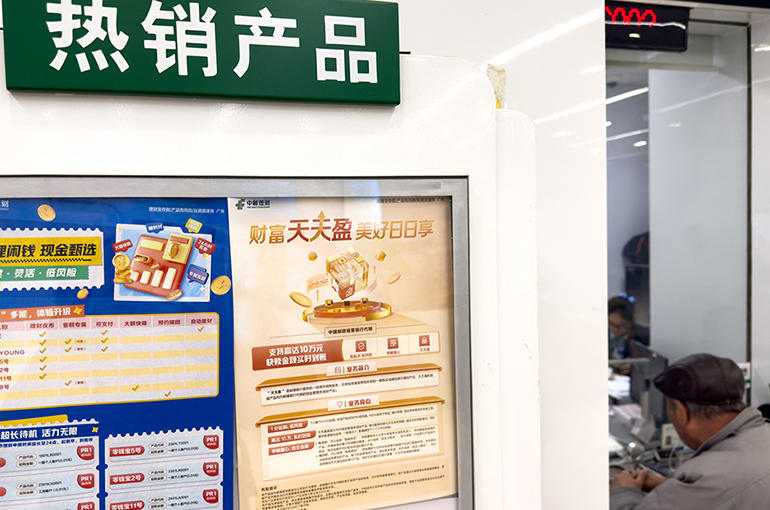
More households and companies are shifting their funds from traditional bank deposits into wealth management products, mutual funds, and other asset management offerings in pursuit of higher returns. When households invest in these asset management products, the funds often get channeled into interbank deposits or certificates of deposit, which subsequently boost the deposits held by non-bank financial institutions at banks. Even if invested elsewhere, these funds ultimately re-enter the banking system as deposits held by corporations or related entities. From a flow perspective, this movement of capital is more about a reallocation within the system rather than an outflow of liquidity.
The implementation of new regulations on interbank deposit rates on December 1, 2024, directly caused a sharp decline in non-bank deposits in January 2025, creating a low-base effect, according to a report from a securities firm. Additionally, the recent robust performance of the capital markets encouraged households to shift money from bank deposits into non-bank financial products, leading to slower growth in household deposits but faster increases in non-bank deposits.
Non-bank deposits grew by 2.5 trillion CNY (around $363.3 billion) compared to the previous year, driven by both the low last-year base and the active start to the stock market, which drew household funds. In January, average daily trading volume surged 58 percent from the month prior.
A senior macro analyst pointed out that deposits represent just one potential source of liquidity for the equity markets. Funds currently allocated to insurance and bond investments could have further scope to be redirected into stocks. Asset management strategies are adjusted in response to market conditions, yield curve movements, and regulatory updates, making non-bank deposits less stable, he explained. Sharp market swings could cause concentrated redemptions, compelling non-bank institutions to withdraw large sums from banks.
While non-bank deposits tend to cost banks roughly 10 to 15 basis points less than traditional deposits, their volatility can substantially increase liquidity management challenges, potentially offsetting the cost advantages and raising overall funding costs.
 ChatGPT
 Perplexity
 Gemini AI
 Grok AI