
Select Language:
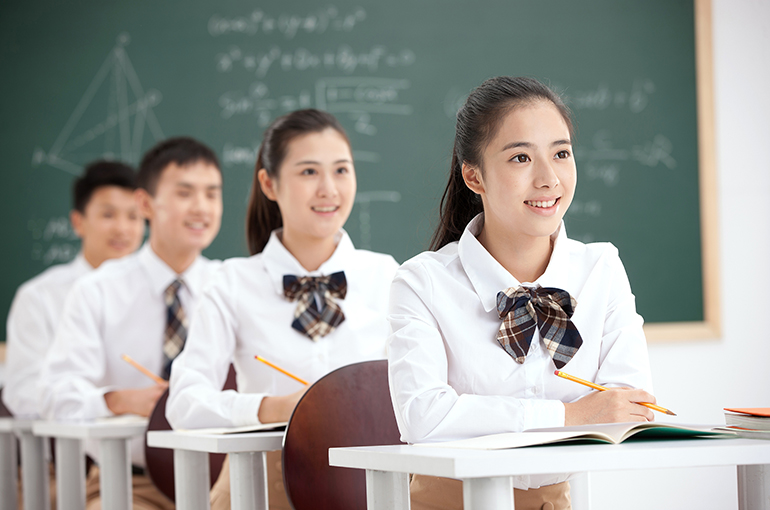
More than 60% of middle school graduates in China moved on to academic high schools last year, as a growing number of students opted for university tracks instead of vocational education, driven by expanded programs and better infrastructure. Since the early 2000s, the enrollment rate for academic high schools—representing the percentage of middle school graduates enrolling in these schools—has steadily increased.
China’s high school system includes three main categories: academic high schools, secondary vocational schools, and adult high schools. Academic high schools focus on preparing students for university through a curriculum centered around cultural knowledge and academic skills. Secondary vocational schools concentrate on technical training to develop skilled workers for various industries, while adult high schools serve individuals who did not complete school earlier in life.
Last year, there were approximately 15,800 academic high schools across the country, enrolling nearly 10.4 million new students. With around 17 million middle school graduates in the same period, the national enrollment rate for academic high schools reached 61 percent.
Back in 2001, China had about 14,910 academic high schools with 5.6 million new enrollments, while 17.3 million students graduated from middle school. At that time, only about 32.2 percent of graduates entered academic high schools—a rate that has more than doubled over the years.
The increase in enrollment figures is partly due to expanded infrastructure—many regions have constructed new schools and increased capacity, with some areas surpassing a 70 percent enrollment rate. For example, Shenzhen saw its academic high school admission rate exceed 73 percent this year.
Economics professor Ding Changfa from Xiamen University explained that local governments have recently implemented multiple strategies to boost investment and expand the capacity of academic high schools.
Additionally, many secondary vocational schools have begun offering comprehensive high school programs, providing more flexible pathways for students. This development has helped reduce parental concerns and bridge the gap between academic and technical education.
 ChatGPT
 Perplexity
 Gemini AI
 Grok AI