Select Language:
China urges an end to the Middle East conflict, warning of its repercussions on global energy supplies, shipping routes, and trade. The nearly three-week-old violence shows no signs of easing.
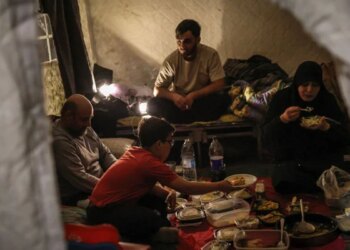
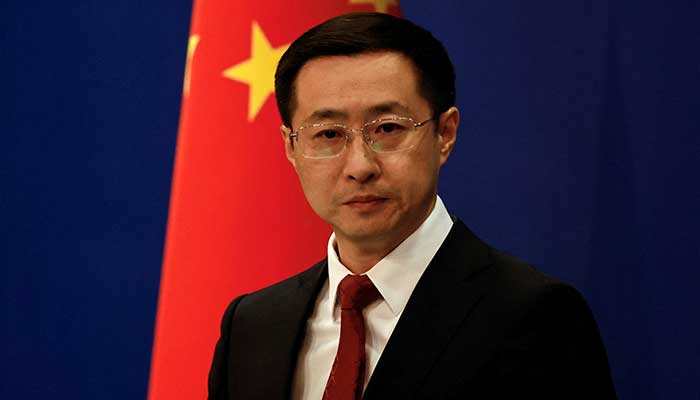
“History and current events make it clear that force isn’t the answer,” stated Lin Jian, spokesperson for China’s foreign ministry, when asked about messaging to Muslim communities observing Ramadan.
He emphasized that the ongoing widening conflict harms the collective interests of nations worldwide. Beijing advocates for all parties involved to cease hostilities and keep energy flows from the region unaffected.
This statement marked the 23rd anniversary of the Iraq War, initiated in 2003 when U.S.-led forces invaded Iraq to remove Saddam Hussein, partly based on allegations of weapons of mass destruction.
That war led to years of chaos, instability, and a power vacuum that facilitated the rise of extremist groups like ISIS.
Chinese Foreign Minister Wang Yi also called on France to increase strategic coordination with China to prevent further involvement by other countries. Wang has been in contact with officials from every permanent UN Security Council member except the United States since the conflict began.
Analysts view this situation as an opportunity for Beijing to bolster its image as a more dependable global leader.
The conflict has caused delays in planned talks between Xi Jinping and U.S. President Donald Trump—initially anticipated as a chance to reset strained relations. Trump’s upcoming visit to China was seen as a move toward improving ties impacted by trade disputes and tariffs.
 ChatGPT
 Perplexity
 Gemini AI
 Grok AI