Select Language:
China plans to gradually eliminate kindergarten fees for children in their final year before starting primary school, potentially benefiting over 10 million six-year-olds. This initiative is part of ongoing efforts to encourage increased birth rates across the country.
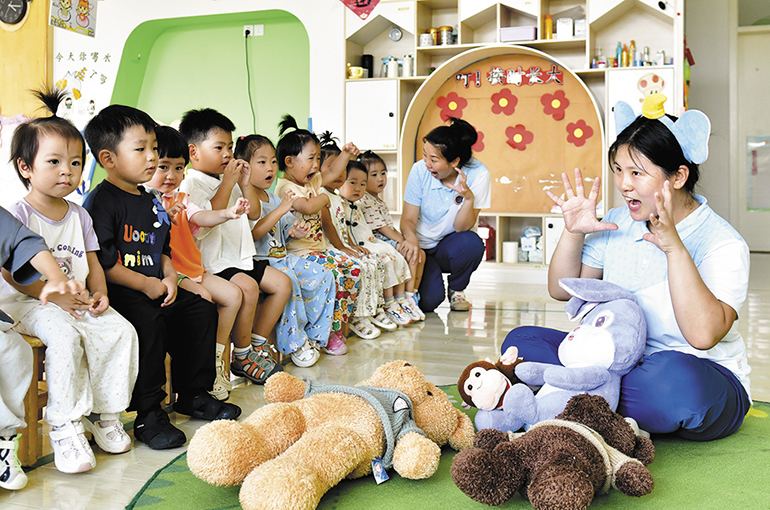
Starting this fall, public kindergartens will offer free care and education for children in their third year of preschool. Private kindergartens, which often charge higher tuition, will reduce their fees to match local public standards, though families will still be responsible for additional costs. Kindergarten expenses mostly include care and education, meals, and activity fees. The new policy focuses solely on waiving care and education costs, primarily to keep it financially sustainable.
As of the end of last year, China had over 250,000 kindergartens serving more than 35.8 million children, mostly aged three to six. It’s estimated that more than 10 million children will benefit from free kindergarten education starting this semester.
The government will cover the waived fees, with the share varying based on regional financial capacity. Wealthier provinces like Beijing and Shanghai will shoulder about half of the costs, while less affluent regions will contribute between 20% and 40%.
In 2021, China ended its family planning restrictions, lifting limits on the number of children families can have. This move was driven by declining birth rates and an aging population. Several measures have been introduced to reduce the costs related to child-rearing and encourage larger families.
Recently, the country launched a national childcare subsidy program, providing CNY 10,800 (roughly USD 1,500) per child for the first three years. This effort aims to reverse the declining birth rate, which fell from 2016 to 2023 due to rising living expenses, later marriages, and a preference among younger generations for smaller families.
Last year, the birth rate saw a slight increase to 6.77 per 1,000 people, helped by increased government support and couples choosing to delay childbirth during the Year of the Dragon.
 ChatGPT
 Perplexity
 Gemini AI
 Grok AI