Select Language:
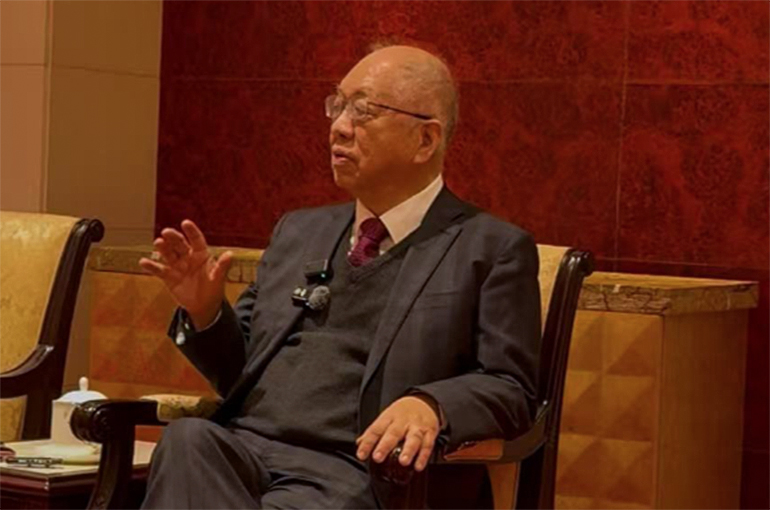
China is poised to become a math powerhouse within the next five to ten years, with an increasing number of its mathematicians potentially earning the prestigious Fields Medal, the world’s top award in mathematics. This optimism was conveyed by a renowned mathematician, the first Chinese recipient of this accolade.
The Chinese mathematics community has grown dynamically and diversely, making significant advances in number theory, algebra, and geometry. According to recent remarks during the 10th International Congress of Chinese Mathematicians held in Shanghai, the field has seen considerable progress over the past few decades. Back when the congress was founded 28 years ago, most Chinese mathematicians specialized in a few narrow areas.
This year’s congress, taking place from January 3 to January 7, celebrated several notable achievements, including three Chinese mathematicians receiving the esteemed ICCM Gold Medal of Mathematics. Among them is Wang Hong, a professor at New York University’s Courant Institute of Mathematical Sciences, who announced in February 2025 that she and her collaborators had solved the classical geometric problem known as the Kakeya Conjecture. At just 35 years old, she is now among the leading contenders for the 2026 Fields Medal.
The process of selecting this year’s Fields Medal laureates began last fall, with announcements expected in February. The competition this year is highly competitive, and the outcome is uncertain, with experts acknowledging that comparing results across different fields and subjective judgments might influence the final decision.
There is a wealth of young talented mathematicians in China, many around the age of 12, who are on par with their peers from the United States and other countries. This indicates that China does not lack original and creative young talent. However, once students enter high school, the focus often shifts to exam-oriented education that emphasizes finding a single correct answer. Such a system trains students to optimize within set parameters but can inhibit their ability to ask new questions or pursue innovative ideas.
The societal approach to education should evolve to foster more creativity by involving top scholars in basic education and science outreach efforts, thereby encouraging a more exploratory and imaginative mindset, it was noted.
During the discussion, thoughts on artificial intelligence were also shared. It was emphasized that AI cannot fully replace mathematicians. To overcome limitations related to energy use and processing power, AI must delve into developing fundamental mathematical theories. Scientific progress is driven by conceptual breakthroughs—redefining the nature of problems, rather than merely optimizing solutions within existing frameworks. Major mathematical discoveries often represent a deep rethinking of core concepts, leading to revolutionary advances in understanding.
 ChatGPT
 Perplexity
 Gemini AI
 Grok AI