Select Language:
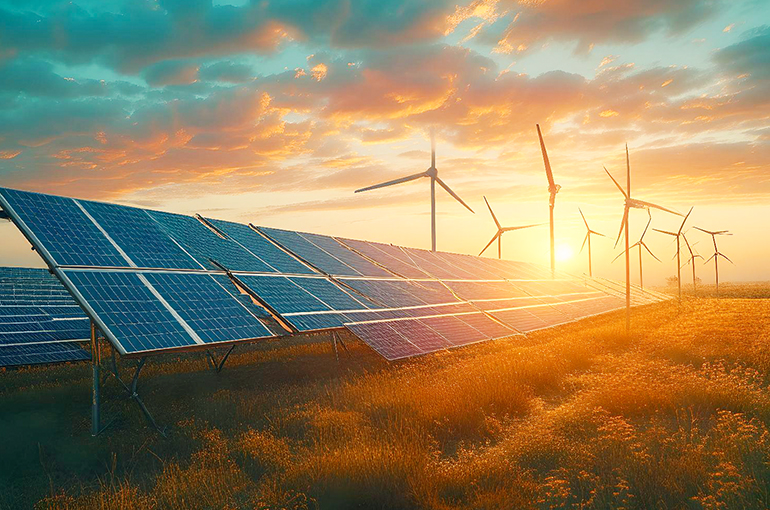
China has announced plans to expand the development of virtual power plants, vehicle-to-grid systems, and local renewable energy use over the next five years, according to a senior energy official. The director general of the electricity division at the national energy authority stated that innovative technologies like virtual power plants—which combine distributed energy sources such as solar and wind—and vehicle-to-grid systems that allow electric cars to feed electricity back into the grid will be central to the upcoming five-year plan for 2026 to 2030.
In order to manage the unpredictable nature of wind and solar power, authorities intend to accelerate the construction of a modernized power system and improve the grid’s capacity to incorporate renewable energy sources, the official added at a recent press conference. The country’s renewable energy sector has experienced rapid growth in recent years, with installed capacity ranking first worldwide for several consecutive years. However, the official highlighted that this fast expansion has posed challenges for power consumption in certain regions.
Looking forward, China aims to develop more intelligent power plants capable of better forecasting wind and solar energy generation. The country also plans to enhance grid flexibility by integrating various power sources—including wind, solar, hydro, and thermal energy—under a unified operational framework.
Furthermore, efforts will focus on strengthening the coordinated development of major power grids, distribution networks, and microgrids to increase overall capacity and facilitate the integration of large-scale renewable sources. The construction of cross-provincial transmission lines and the initiation of flexible mutual aid projects across regions are also part of the strategy to optimize energy distribution.
Additionally, the country will continue to improve the grid’s ability to absorb new energy sources while actively exploring alternative pathways for energy utilization. This includes promoting the large-scale deployment of green hydrogen produced from wind and solar energy.
The plan emphasizes that green hydrogen will play a role in supporting downstream applications such as green metallurgy, ammonia production, methanol synthesis, and sustainable aviation fuels.
 ChatGPT
 Perplexity
 Gemini AI
 Grok AI