
Select Language:
China’s fiscal spending structure underwent a notable shift last year, with increased allocations directed toward social programs such as social security, employment, and healthcare. Conversely, expenditure on infrastructure projects saw a significant decline—the first decrease of its kind since record-keeping began.
Government outlays for social security and employment rose by 6.7% year-over-year, reaching approximately 4.4 trillion yuan (around $636.7 billion). This increase surpassed the previous year’s growth rate by 1.1 percentage points. Healthcare spending also experienced a substantial rise of 5.7%, amounting to about 2.1 trillion yuan (roughly $304 billion), reversing a 9.1% decline the year prior.
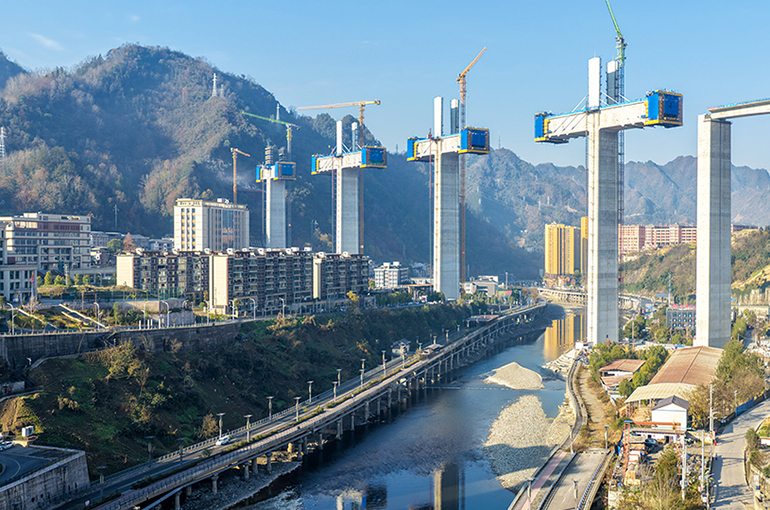
In stark contrast, spending on infrastructure-related sectors weakened considerably. Expenditures on agriculture, forestry, and water conservation fell by 13.2% to 2.3 trillion yuan (approximately $332.7 billion). Urban and rural community development investments declined by 5% to 2.1 trillion yuan, while transportation investments dipped by 0.7% to 1.2 trillion yuan. The combined expenditure across these three categories dropped by 7.8%.
Overall, the country’s total fiscal expenditure increased by a modest 1% last year, reaching roughly 28.7 trillion yuan (about $4.2 trillion).
Analysts note that last year, fiscal funds were increasingly targeted at bridging gaps in social welfare programs, while infrastructure spending contracted. This trend was further influenced by local governments scaling back investment to manage debt risks, leading to the first nationwide decline in infrastructure investment since detailed data collection began in 2004.
Excluding rural households, China’s fixed asset investment fell by 3.8% last year, totaling roughly 48.5 trillion yuan (around $7 trillion). Infrastructure investment specifically declined by 2.2%, according to data from the National Bureau of Statistics.
For many years, China maintained steady annual growth in infrastructure investment—typically between 5% and 10%. The recent slowdown could suggest that the traditional infrastructure-led growth model has hit a temporary ceiling, according to Xiao Guangrui, CEO of a data analytics firm.
Despite the decline in conventional infrastructure investments, manufacturing and high-tech service investments have remained resilient, indicating a shift in the investment pattern. Funds are increasingly flowing from traditional infrastructure into emerging growth sectors, Xiao explained.
Looking ahead, with 2026 marking the first year of the country’s 15th Five-Year Plan, infrastructure investment growth is expected to rebound to around 8%. This optimism stems from the rollout of new policy-based financial tools and government initiatives designed to lay the groundwork for economic expansion and launch major projects, said Yuan.
 ChatGPT
 Perplexity
 Gemini AI
 Grok AI