Select Language:
China has announced a plan to establish three major consumer hubs, each worth 1 trillion yuan (approximately $141.3 billion), along with ten smaller zones valued at 10 billion yuan (around $1.4 billion) by 2027, aiming to stimulate domestic demand in sectors such as automobiles, artificial intelligence, and elder care services.
Products should be meticulously tailored to meet the varied preferences of consumers, creating a balanced “dual approach” between supply and demand, said Xie Yuansheng, vice minister of the Ministry of Industry and Information Technology. This plan was unveiled in collaboration with the National Development and Reform Commission and four other government bodies during a recent policy briefing.
The strategy emphasizes enhancing AI integration and capabilities. As of June 30, the number of Chinese users engaging with generative AI tools reached 515 million, according to He Yaqiong, director of the MIIT’s consumer goods industry division. He highlighted that consumption is shifting from simply purchasing products to subscribing to a lifestyle.
The Ministry of Industry and Information Technology commits to advancing product innovation and developing new use scenarios to speed up AI technology applications within the consumer goods industry.
In response to the aging population, the ministry plans to collaborate with relevant agencies to boost research and development of elderly care robots, elderly-friendly footwear and clothing, easy-to-swallow foods, and other specialized products. Efforts will also continue to adapt internet apps and smart devices to be more age-friendly.
Additionally, the MIIT is working on establishing a comprehensive standard system for elderly products and is exploring certification initiatives, such as a “silver age” label, to ensure products meet quality and safety standards and offer reassurance to consumers.
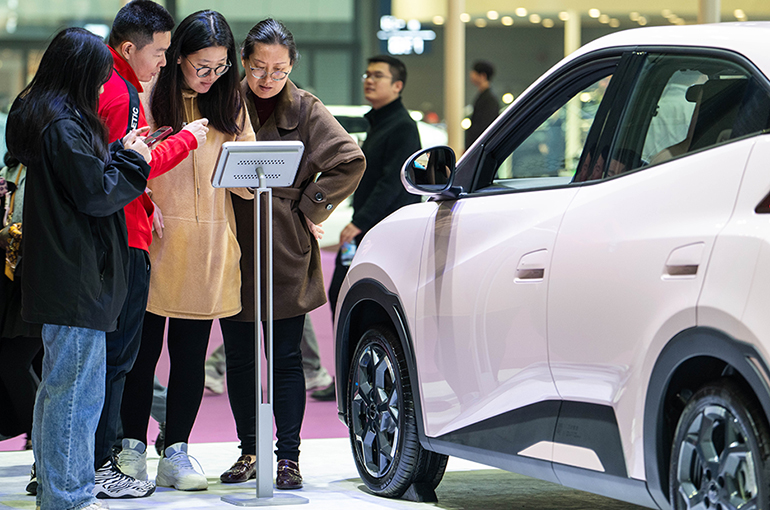
Regarding consumer spending on high-value items, the Ministry of Commerce is pushing forward with pilot reforms aimed at expanding the automotive aftermarket. This includes activities like vehicle modifications, leasing options, sports events, and recreational vehicle camping, to foster broader automotive consumption.
The Ministry of Culture and Tourism intends to introduce a “refund upon purchase” policy for tourists leaving China, encouraging more international visitors.
The State Administration for Market Regulation will continue its strict enforcement against counterfeit and substandard goods, working to maintain a robust chain of quality and safety standards for consumer products, as emphasized by Market Inspection Commissioner Ji Xiaoling.
 ChatGPT
 Perplexity
 Gemini AI
 Grok AI