Select Language:
From 2021 to 2024, government financial authorities across all levels allocated approximately 3.78 trillion RMB (around 539 billion USD) from the national public budget to support higher education, with local governments providing the majority of the funding. According to a recent report, local authorities contributed about 2.76 trillion RMB (roughly 394 billion USD), covering nearly 73% of the total investment, while the central government contributed around 1.02 trillion RMB (approximately 143 billion USD).
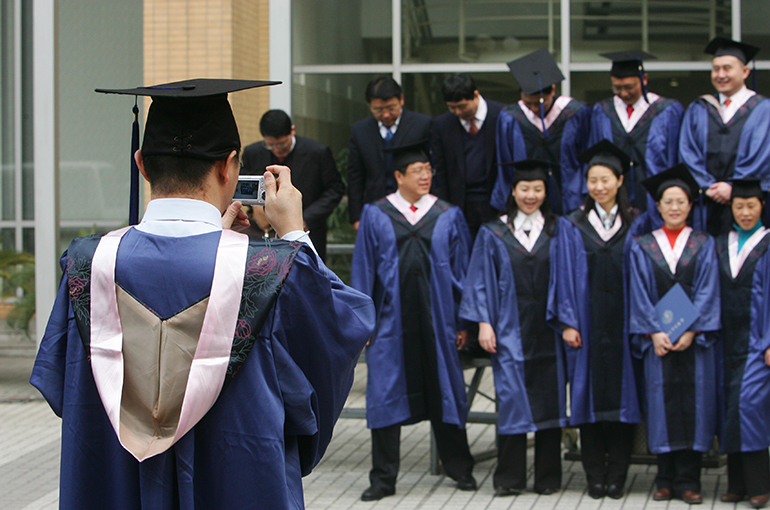
This investment represented roughly 3.6% of the country’s total public budget of 106.6 trillion RMB (about 15.2 trillion USD). Supported by these fiscal funds, China has established the world’s largest higher education system, now entering a phase of mass enrollment. The gross enrollment ratio increased by 6.4 percentage points between 2020 and 2024, reaching 60.8%. Currently, over 240 million individuals hold college-level degrees.
Despite the growth, recent economic challenges—such as a sluggish housing market, a slowdown in revenue due to tax cuts and fee reductions—have put pressure on funding. Education spending has maintained a steady upward trend, creating a growing gap between revenue and expenditure, which poses a significant challenge for sustainable funding.
Looking forward, funding for higher education will primarily continue to come from local governments, but the central government plans to enhance its support through mechanisms like centralized budget allocations and long-term treasury bonds to finance infrastructure projects at colleges and universities.
Additionally, efforts will focus on expanding access to quality higher education. This includes gradually increasing enrollment in top undergraduate programs, expanding postgraduate studies, and steadily growing the number of doctoral students.
 ChatGPT
 Perplexity
 Gemini AI
 Grok AI