
Select Language:
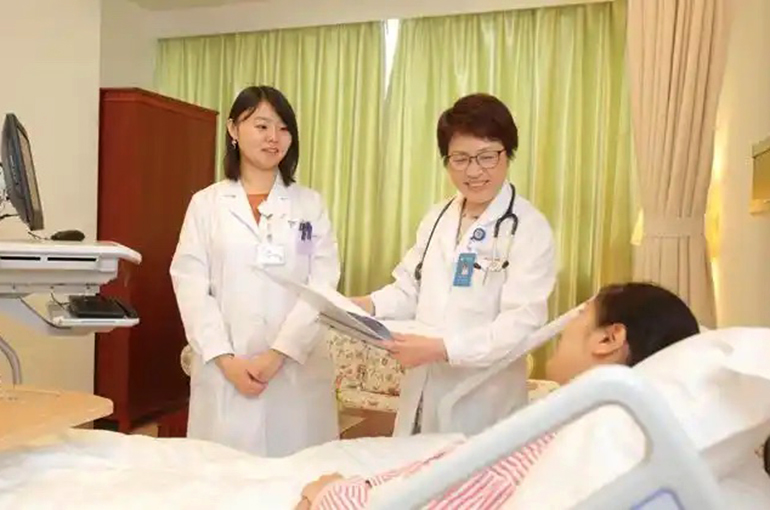
China is increasingly emerging as a popular destination for international travelers and patients from developed countries seeking medical care, as the country’s healthcare services advance and visa-free transit policies expand, a senior healthcare management official revealed.
Lower treatment costs, quicker services, and improving medical technology are attracting a growing influx of foreign patients to Chinese hospitals. In Shanghai, the number of international visitors utilizing public hospital international departments has grown by double digits since 2024, with over half undergoing inpatient procedures or surgeries, according to industry sources.
Personal accounts shared on Chinese social media illustrate the appeal. “I recently had an MRI scan at a hospital in Kunming for just 486 yuan (about $70). In the U.S., it would cost thousands,” said South African blogger Lizzy. “The entire process, including registration, consultation, appointment, and exam, took around two and a half hours. In the U.S., making an appointment can take months. The speed and affordability of healthcare in China are simply amazing.”
American actor Da Yang shared a similar experience. “I underwent hip joint surgery in Shanghai last September, paying roughly 30,000 yuan (around $4,300) instead of $30,000. I stayed in the hospital for six days and recovered quickly. Now I can walk normally without any issues.”
Foreign Patients Seek Advanced Medical Procedures
International patients are increasingly open to receiving complex treatments in China. “Our hospital’s international department has seen significant changes,” said Gu Jingwen, director of the International Medical Center at Huashan Hospital affiliated with Fudan University.
“Initially, foreign patients only came for minor ailments, but now they’re willing to undergo minimally invasive surgeries, radiotherapy and chemotherapy for tumors, or even multi-disciplinary consultations. They find reassurance knowing the hospital is equipped with robotic technology,” Gu explained.
Some overseas patients are referred by doctors in their home countries. In September 2024, Shanghai designated 13 public hospitals—including Huashan and Ruijin hospitals—as pilot sites for international medical tourism.
Cost advantages are a key factor. Lower prices for imported original drugs and medical procedures, coupled with streamlined consultation processes, have led patients from the U.S., Canada, and Southeast Asia to seek treatment in Shenzhen, according to Xia Yihuang, COO for the Guangdong-Hong Kong-Macao Greater Bay Area at New Frontier. The United Family Healthcare group operates hospitals in the region.
“Particularly in targeted cancer treatments, patients from the U.K. and Italy have come to Shenzhen after unsuccessful first-, second-, and third-line therapies in their countries,” Xia said. “Some have directly sought Chinese-developed drugs for cancer under guidance from overseas doctors.” Hospitals also support overseas patients with post-surgical rehab and follow-up via WhatsApp, accommodating their preferences, he added.
Pricing and Policy Hurdles
Despite increasing demand, challenges remain. The pricing system for overseas patients in China’s medical services is still incomplete, noted Zhao Haibo, executive director of the Shanghai Jiao Tong University–Yale University Joint Center for Health Policy.
Charges for foreign patients at public hospital international departments should be distinctly separated from basic healthcare costs and managed through full cost accounting, with revenue supporting hospital development, Zhao emphasized. Non-public medical institutions need to continuously upgrade medical technologies and strengthen cost management.
Policy support is expected to increase. Building on measures introduced by Beijing, Shanghai, and Shenzhen, future efforts will focus on linking commercial insurance with basic medical coverage and improving access to innovative drugs and medical devices.
A senior representative from a leading domestic private health insurance company told reporters that their company collaborates closely with major public hospitals’ international departments and high-end medical centers. “We’ve assigned staff to hospitals we partner with,” the individual said.
“Patients with international insurance just need to show their ‘direct payment’ cards to access hospitals under agreements with insurance providers. They can settle insurance claims directly through their providers,” the insurance executive explained.
 ChatGPT
 Perplexity
 Gemini AI
 Grok AI