
Select Language:
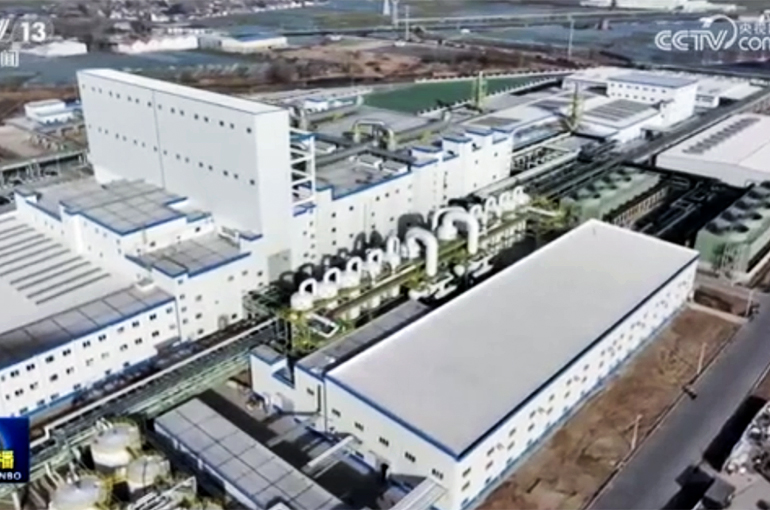
China has announced the ninth batch of major foreign-funded projects, totaling an investment of $13.4 billion. The projects, selected by the National Development and Reform Commission, predominantly focus on manufacturing industries such as electronics, chemical engineering, automobiles, and electrical machinery, aiming to accelerate the growth of industrial clusters. For the first time, logistics projects were included to bolster support for the services sector.
These significant investments boast strong industrial momentum and technological leadership. The projects approved so far have accumulated a total investment of $108 billion, highlighting their influential role in attracting foreign investment and driving economic development.
Additionally, new research and development initiatives, including those in biomedical fields, have been approved, signaling China’s increasing support for the services sector and the ongoing integration with advanced manufacturing industries. The foreign investors involved include multinational corporations from Germany, Sweden, Switzerland, Turkey, and the United Kingdom.
The government plans to maintain and strengthen efforts in managing these projects through dedicated workgroups, comprehensive project tracking, and targeted support initiatives. Authorities are committed to listening to enterprise needs and resolving practical issues to foster a favorable environment for foreign investments.
This year’s government work report emphasizes expanding bilateral investment collaborations, reforming foreign investment policies, ensuring equal treatment for foreign companies, and updating the catalogue guiding foreign investment industries. It also encourages reinvestment by overseas firms within China, enhancing support services for foreign enterprises, and building the “Invest in China” brand.
Despite global economic uncertainties, China remains an attractive destination for foreign investment due to its vast market, integrated industrial and supply chains, and its rise to prominence in scientific and technological innovation, according to Wan Zhe, a researcher at Beijing Normal University’s Belt and Road School. He also highlighted the country’s abundant talent pool and high-level openness as factors that make China especially appealing to high-end industries.
Over the past four decades of reform and opening-up, many sectors, including manufacturing, have become highly open. Still, the service industry’s massive growth potential suggests that China needs to further open its markets, both in scope and quality, to become a leading global hub, explained Bai Ming, a member of the Chinese Academy of International Trade and Economic Cooperation.
The focus on expanding the service sector is central to China’s ongoing efforts to open up economically, according to Wen Bin, chief economist at China Minsheng Bank. To facilitate two-way investment and deepen international cooperation, stabilizing foreign investment, ensuring equal treatment, building the “Invest in China” brand, and encouraging strategic cross-border industry and supply chain development are essential steps.
 ChatGPT
 Perplexity
 Gemini AI
 Grok AI