Select Language:
Dec. 16 — China has played a significant and diverse role in Saudi Arabia’s growth, fostering a strong and ongoing partnership in trade and business, according to the vice chairman of the Saudi National Development Fund.
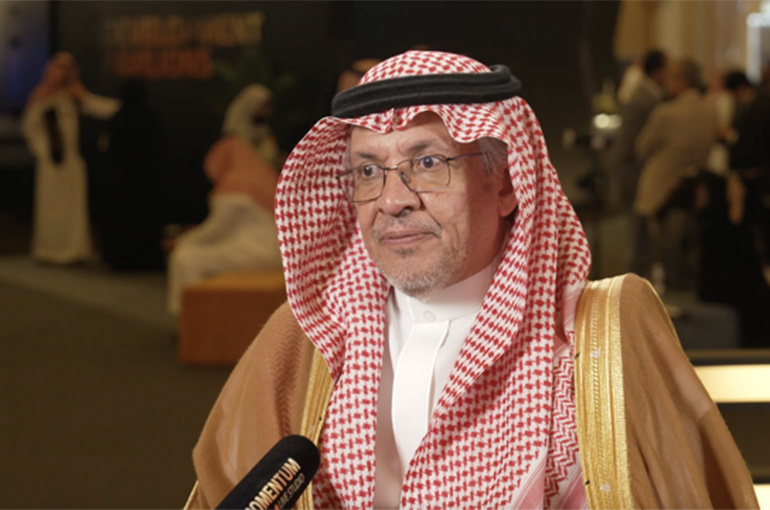
The interview took place during the Momentum 2025 Development Finance Conference, held from December 9 to 11.
As Saudi Arabia’s largest trading partner in the Middle East, the kingdom is rapidly advancing its economic restructuring under the Vision 2030 initiative. The National Development Fund is a vital entity supporting the nation’s goals for economic transformation outlined in this plan.
Below are key highlights from the interview:
Question: Vision 2030 is a major strategic plan for Saudi Arabia’s economic transformation. As this initiative approaches its tenth anniversary, have there been notable adjustments or enhancements in the country’s fiscal strategy?
Al-Tuwaijri: First, thank you very much. It’s always a pleasure to speak with a Chinese audience. China has significantly influenced our region positively. We share an excellent relationship as trading and business partners. I’m honored to discuss this.
Over the past decade, Saudi Arabia has placed a strong emphasis on diversifying its economy. New sectors, projects, and ideas have been introduced, including tourism, culture, sports, e-sports, massive infrastructure projects, logistics, connectivity solutions, and a new airline.
This effort is focused on growing the non-oil gross domestic product, even though the kingdom remains a global leader in oil and gas energy, which remains crucial. Recently, the government has shifted its focus toward the new economy — the non-oil sectors — directing most resources toward this goal. Currently, about 55% of our GDP is non-oil, which is a milestone worth celebrating. This is an ongoing journey.
The private sector plays a pivotal role in this process. How do we enable its growth and active participation? Our financing system, the National Development Fund, was established roughly seven years ago to support private sector segments—including small and medium-sized enterprises and beyond—in engaging with this transformation.
Question: The National Development Fund serves as an overarching organization, integrating 12 distinct funds and functioning as a strategic engine. From a system design perspective, what are the core principles and strategic rationale behind this highly centralized, collaborative approach?
Al-Tuwaijri: The main goal is impact. How can these aggregated funds across various sectors influence specific criteria? These criteria include non-oil GDP growth, better balance of payments, sustainable job creation, and enhancing local content.
We coordinate this through a centralized treasury and strategic capital allocation, using a model-based approach to ensure that funding focuses where it’s needed most. During crises like the pandemic, we deployed 29 billion riyals to support the most affected sectors, such as transportation, with mechanisms in place to help private companies during shocks, especially those most vulnerable.
Question: With emerging technologies like artificial intelligence, how does Saudi Arabia balance its commitment to its long-term development roadmap while remaining flexible enough to adopt new opportunities?
Al-Tuwaijri: The role of the Public Investment Fund is to introduce new technologies and create new sectors that support economic growth. It’s a matter of risk management — how much risk are we willing to accept? Technologies like AI are comparable to when mobile phones and the internet first appeared; they present enormous opportunities.
Our governance structure guides how much risk we can assume, supported by extensive research and analysis. We have a well-established governance culture that helps us make informed decisions on emerging innovations like AI.
Question: How do you view Saudi Arabia’s economic collaboration with China? How can both nations develop a partnership that moves beyond the traditional buyer-seller relationship?
Al-Tuwaijri: Three years ago, there were very few flights between Saudi Arabia and China. Now, that number has grown substantially, with direct routes connecting Riyadh, Jeddah, Hong Kong, Shanghai, Beijing, and more. With the upcoming launch of Riyadh Air, we expect even more destinations. There are hundreds of schools in Saudi Arabia teaching Chinese, and tourism agreements now recognize Saudi Arabia as a preferred destination for Chinese travelers.
Many Chinese companies are interested in establishing regional offices within the kingdom. Our institutions and major corporations are also investing in China. While trade is vital, we’re also sharing knowledge and ideas. The relationships built through people-to-people connections are equally important. Although our country is much smaller than China, many compare our current growth trajectory to China’s from three decades ago.
 ChatGPT
 Perplexity
 Gemini AI
 Grok AI