Select Language:
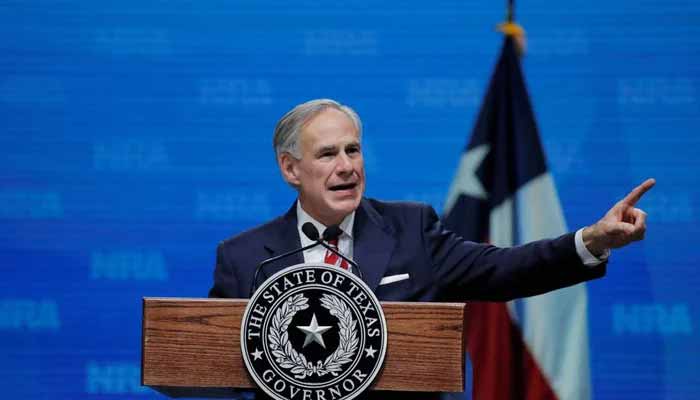
The Council on American-Islamic Relations (CAIR), one of the nation’s leading Muslim civil rights groups, filed a federal lawsuit Thursday against Texas Governor Greg Abbott and Attorney General Ken Paxton. The lawsuit aims to prevent the enforcement of a gubernatorial order labeling CAIR as a “foreign terrorist organization” and prohibiting it from purchasing land within the state.
This legal action was jointly filed by CAIR’s chapters in Dallas–Fort Worth and Austin and marks a significant escalation in the ongoing conflict between the state government and the Muslim civil rights community.
CAIR argues that Governor Abbott acted without prior notice, evidence, or a chance for the organization to present its case, effectively branding a longstanding nonprofit as a terrorist group in violation of federal and state laws. The lawsuit asserts that the authority to designate foreign terrorist organizations rests solely with the U.S. Secretary of State, and that the governor’s unilateral decision oversteps constitutional boundaries and exceeds state authority.
Additionally, the suit claims Abbott’s proclamation infringes on CAIR’s rights under the Fourteenth Amendment by damaging its reputation and property interests, and violates the First Amendment’s protections of free speech by targeting the organization’s political criticisms, especially its longstanding opposition to Israeli government policies.
In response to the lawsuit, Abbott issued a statement on X (formerly Twitter), promising that the legal challenge would “expose all of their financial activities and dealings,” and suggesting that Attorney General Paxton “will have a great day” once the organization’s records are examined.
Just a day after the proclamation, Abbott also sent a separate letter instructing criminal investigations into what he describes as “Sharia courts” operating in Collin and Dallas counties. He claims these are Muslim mediation groups acting as courts and implementing Islamic law—a charge strongly denied by CAIR and other community organizations. Abbott directed district attorneys, county sheriffs, Paxton, and state safety officials to investigate these activities.
Meanwhile, the Islamic Tribunal—one of the groups mentioned—clarified on its website that it is not a law firm or a judicial entity, nor are its members attorneys. The group states it provides voluntary mediation and arbitration based on Islamic principles, with all proceedings conducted in accordance with federal, state, and local laws. It emphasizes that no binding decisions are made unless officially recognized by a court.
The tribunal also pointed out that Muslim, Christian, and Jewish communities across the U.S. use voluntary mediation systems that coexist with, but do not replace, official courts.
Abbott’s recent actions follow his remarks equating CAIR and the Muslim Brotherhood with foreign terrorist organizations—a claim CAIR Texas dismisses as an “Islamophobic conspiracy theory.” CAIR insists that Americans have a constitutional right to pursue voluntary religious mediation, with only state courts holding legal authority to enforce judgments.
Charlie Swift, an attorney with the Muslim Legal Fund of America, criticized Abbott’s actions as unconstitutional and predicted the proclamation would fail in court. CAIR’s General Counsel Lena Masri noted that the organization has previously defeated Abbott multiple times in First Amendment suits and expressed confidence that they would succeed again.
CAIR-Texas added that the governor seems to be targeting U.S. Muslims influenced by “Israel First politics” and vowed to continue defending their constitutional rights without fear or intimidation.
The lawsuit describes Abbott’s assertions as false, defamatory, and unsupported under Texas law, emphasizing that CAIR is an independent U.S.-based nonprofit unaffiliated with any foreign groups. The organization seeks an injunction to halt the implementation of Abbott’s order and damages for the harm caused by the designation.
The dispute has grown into a major constitutional and political confrontation in Texas, with potential implications that could influence Muslim civil rights across the country.
 ChatGPT
 Perplexity
 Gemini AI
 Grok AI