Select Language:
Bangladeshis flocked to polling stations in large numbers on Thursday to vote in an election widely regarded as crucial for restoring stability and spurring economic growth after the 2024 removal of long-serving Prime Minister Sheikh Hasina, following a youth-led uprising. Experts emphasize the importance of securing a decisive mandate to ensure consistent governance in a country with a population of 175 million, especially after anti-Hasina protests triggered months of unrest that disrupted key industries, including the country’s vast garment sector — the world’s second-largest exporter.
The election features two competing coalitions led by former allies — the Bangladesh Nationalist Party (BNP) and the Islamist Jamaat-e-Islami — with polls suggesting the BNP holds a slight lead.
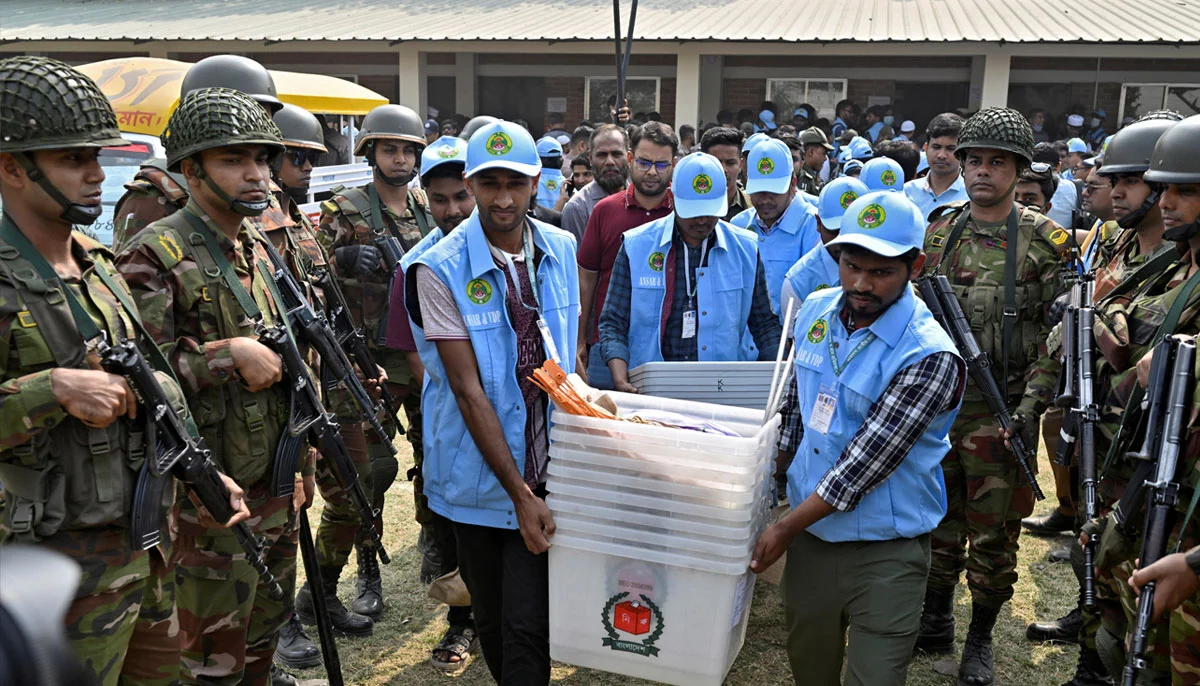
[Image: Members of Ansar and VDP transport ballot boxes from a distribution center to polling stations in Dhaka, February 11, 2026. — Reuters]
[Image: Election officials review paperwork during the 13th general election in Dhaka, February 12, 2026. — Reuters]
[Image: Women wait in line to cast their votes outside a polling station during the election in Dhaka, February 12, 2026. — Reuters]
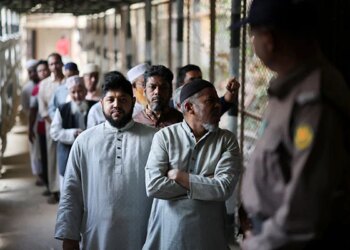
[Image: Voters line up at a polling station on election day in Dhaka, February 12, 2026. — AFP]
[Image: Supporters of BNP ride a vehicle outside a polling station during the election in Dhaka, February 12, 2026. — AFP]
[Image: A polling official marks the thumb of Bangladesh’s interim government chief advisor Muhammad Yunus with ink during voting, Dhaka, February 12, 2026. — Reuters]
[Image: Police on horseback patrol a street during the election in Dhaka, February 12, 2026. — Reuters]
[Image: Bangladesh Jamaat-e-Islami leader Shafiqur Rahman gestures after voting at a polling station in Dhaka, February 12, 2026. — AFP]
[Image: Tarique Rahman, chairman of BNP, casts his vote inside a polling station during the election in Dhaka, February 12, 2026. — Reuters]
 ChatGPT
 Perplexity
 Gemini AI
 Grok AI