Select Language:
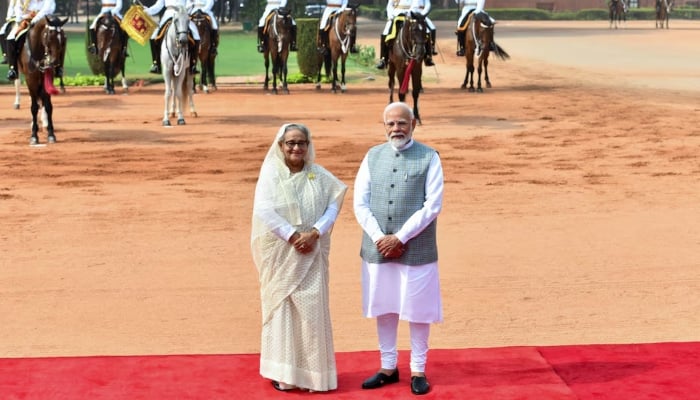
Bangladesh demanded that India extradite Sheikh Hasina, the former Prime Minister who was recently sentenced to hang for crimes against humanity. The government in Dhaka called for her immediate extradition, asserting that it is India’s legal responsibility to do so. Bangladesh also requested the extradition of former interior minister Asaduzzaman Khan Kamal, who is also believed to be in India. The Bangladeshi Foreign Ministry emphasized that granting asylum to these individuals would be seen as hostile and unjust. India acknowledged the court’s verdict but did not comment on possible extradition, reaffirming its commitment to Bangladesh’s well-being and stability.
Sheikh Hasina’s leadership over the past 15 years had been marred by human rights violations, including mass detentions and extrajudicial killings. Last year, Bangladesh announced plans to seek an Interpol Red Notice for Hasina, although no action has been recorded on the international police’s alert list. Muhammad Yunus, Bangladesh’s interim leader, praised the court’s decision, calling it a historic milestone, and urged calm to prevent unrest.
Leading up to the verdict, there were dozens of minor explosions and vehicle arson incidents across Bangladesh, but no casualties were reported. Sheikh Hasina, who has been in India since her ousting in August 2024, dismissed the proceedings as a political stunt orchestrated by her opponents and claimed she was not involved in the crimes she’s accused of. She criticizes the court’s legitimacy, alleging she was denied proper notice and an opportunity to defend herself.
Despite being governed by a temporary administration led by Nobel laureate Muhammad Yunus, Bangladesh remains unsettled, with tensions rising among her supporters, many of whom plan to boycott upcoming elections. Security is tight in Dhaka and other major cities, with forces on high alert in anticipation of potential unrest.
 ChatGPT
 Perplexity
 Gemini AI
 Grok AI