Select Language:
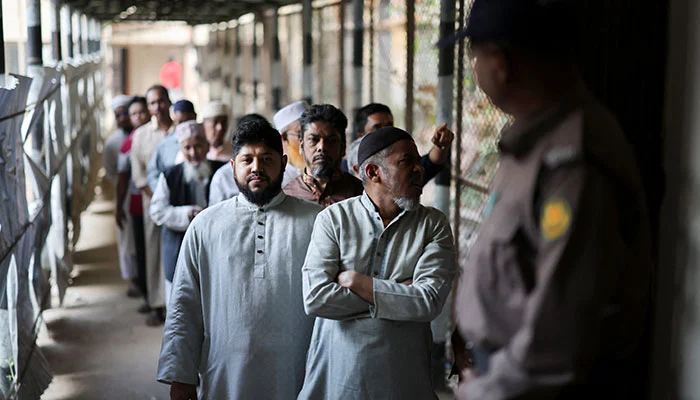
Bangladesh has launched its first national election since the violent protests that ousted Sheikh Hasina in 2024. Voters are lining up at polling stations nationwide amid tight race expectations.
Tarique Rahman, 60, a leading candidate for prime minister, believes the Bangladesh Nationalist Party (BNP) can reclaim power, but faces strong opposition from Jamaat-e-Islami, the country’s largest Islamist party. Jamaat leader Shafiqur Rahman, 67, has managed a disciplined grassroots campaign and, if victorious, could lead the nation’s first Islamist-led government in a secular Bangladesh.
Polls show a wide range of results, though most suggest BNP holds a possible lead, with some indicating a very close race.
“Today’s significance is immense,” said interim leader Muhammad Yunus, who will step down after the election. “It will shape the future of the country, its democracy, its resilience, and the generations to come.”
Yunus, 85, a Nobel Peace laureate, has led the country since Sheikh Hasina’s 15-year rule ended in August 2024. His government has disqualified her Awami League from participating in the elections. Hasina, 78, was sentenced in absentia for crimes against humanity related to a brutal crackdown on protesters while in power, and remains in hiding in neighboring India.
Yunus has also advocated for sweeping democratic reforms, aiming to overhaul what he calls a “completely broken” political system and to prevent a return to single-party dominance.
On Election Day, the 127 million voters will also decide whether to approve reforms including limits on prime ministerial terms, a new upper parliamentary chamber, enhanced presidential authority, and increased judicial independence.
Voters will choose 300 lawmakers directly, with 50 additional women selected from party lists. Over 300,000 security personnel are on duty for the polls, which begin at 7:30 a.m. and will use manual count methods after closing at 4:30 p.m.
Results, traditionally seen hours later, will also include referendum ballots. Experts emphasize the importance of a fair and impartial process, with all parties accepting the outcome, as a sign of genuine democratic renewal.
The next government will inherit a strained economy—Bangladesh is the world’s second-largest textile exporter—and delicate relations with India. Rahman has pinpointed restoring security and stability as priorities if he wins, while acknowledging the enormous challenges ahead.
“The economy has been devastated,” Rahman said. “Unemployment is high, and we need to create opportunities for our youth.”
Meanwhile, his Islamist opponents campaign on promises of justice and anti-corruption efforts. Jamaat’s Rahman says he aims to unite the country and ensure leadership isn’t based on family backgrounds.
Approximately 10% of Bangladesh’s population is non-Muslim, mostly Hindus.
Before voting, Yunus called on citizens to honor the sacrifices of the 2024 uprising and prioritize national interests over personal or party agendas.
“Victory and defeat are both part of democracy,” he said. “Let’s work together to build a just, inclusive Bangladesh.”
 ChatGPT
 Perplexity
 Gemini AI
 Grok AI