
Select Language:
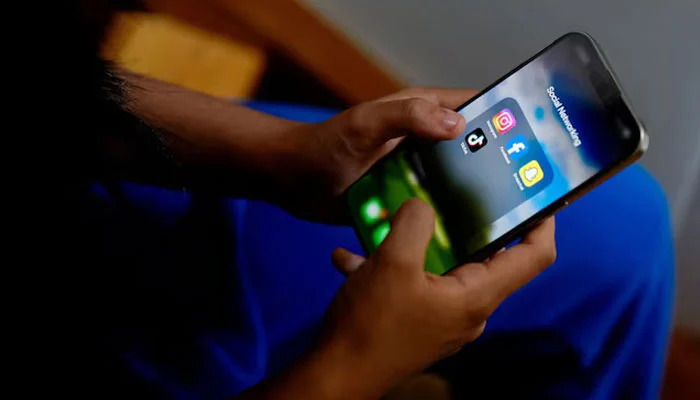
Austria announced on Thursday that it plans to soon ban social media use for children up to age 14, citing concerns that these platforms contribute to addiction, promote violence, spread false information, and impose unrealistic beauty standards.
“Parents find it nearly impossible to regulate their children’s social media activity,” Vice-Chancellor Andreas Babler stated at a press conference, describing these platforms as intentionally designed to foster dependency.
The government of 9.2 million aims to have the new legislation introduced “as early as this summer” to facilitate its swift implementation, Babler added. The focus will be on platforms that employ algorithms fostering addiction, generate profit, and cause harm.
Babler emphasized that children are often “left to their own devices in a world where they’re exposed to unattainable beauty ideals, encouraged to glorify violence, misled by disinformation, and manipulated.” However, he acknowledged that there is no consensus yet among the coalition parties on the verification method to enforce the ban.
Recently, Austria conducted a three-week “no mobile phone” trial involving 72,000 students and their families, led by the education ministry. Education Minister Christoph Wiederkehr noted that feedback indicated students experienced a withdrawal effect but became more aware of the dangers of excessive social media consumption.
Apart from the ban, Austria plans to introduce a new mandatory school subject called “Media and Democracy,” designed to help students discern truth from falsehood and recognize attempts to undermine democratic values.
The far-right FPÖ party, which narrowly missed forming a government after the 2024 elections, condemned the measure as an “attack on free speech,” arguing that the move targets critical, patriotic voices gaining traction online and seeks censorship.
Several other European countries, including France, Spain, and Denmark, are contemplating setting a legal age of majority for social media use, aligning with broader moves across the continent.
In the United States, a Los Angeles civil court found Meta and Google responsible on Wednesday for contributing to a teenage girl’s depression via Instagram and YouTube, citing insufficient warnings about the risks of overuse despite knowing about them. Moreover, a jury in Santa Fe held Meta liable earlier this week for endangering underage Facebook and Instagram users.
 ChatGPT
 Perplexity
 Gemini AI
 Grok AI