Select Language:
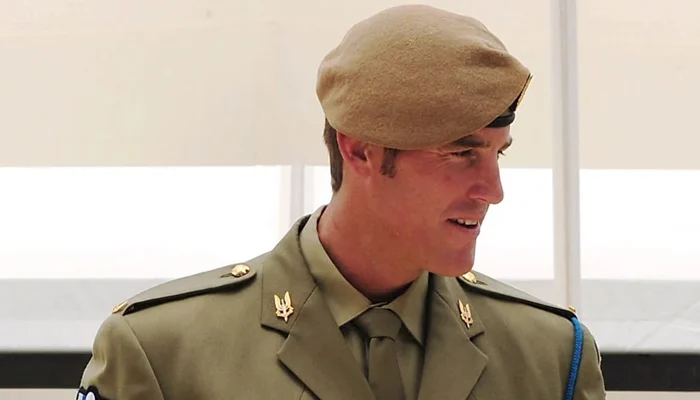
Ben Roberts-Smith, pictured in January 2011 when he received the Victoria Cross, is facing serious allegations. An Australian federal police officer stated that Afghan victims were not engaged in combat when they were shot. The officer also claimed that these victims were either directly shot by Roberts-Smith or by his subordinates under his orders. Consequently, Roberts-Smith is set to face five charges of war crimes, specifically murder.
The former member of Australia’s elite Special Air Service Regiment was once celebrated as one of the nation’s top war heroes, having been awarded the Victoria Cross for exceptional bravery during a mission to find a senior Taliban leader in Afghanistan. He was even given the opportunity to meet Queen Elizabeth II, and his image has been displayed at the Australian War Memorial in Canberra.
However, in 2018, investigative reporting by major newspapers revealed links between Roberts-Smith and the killing of unarmed Afghan prisoners by Australian forces. These revelations sparked an ongoing police investigation into potential war crimes committed by Australian soldiers during their deployment in Afghanistan between 2009 and 2012.
Throughout the controversy, Roberts-Smith has maintained his innocence. He launched a multi-million dollar lawsuit against the newspapers that reported the allegations, disputing the claims and seeking to clear his name.
The serious accusations include accounts of Roberts-Smith kicking an unarmed Afghan civilian off a cliff and allegedly ordering subordinates to shoot him. Reports also suggest he participated in machine-gunning an injured man with a prosthetic leg and reportedly used the limb as a drinking vessel among colleagues.
Australia has deployed approximately 39,000 troops to Afghanistan over two decades as part of US and NATO-led efforts against the Taliban and other militant groups. As veterans returned home, investigations uncovered widespread misconduct, including a 2020 military probe that found Australian special forces unlawfully killed 39 Afghan civilians and prisoners, with allegations of summary executions, body count competitions, and torture.
Growing pressure led the government to appoint a special investigator to examine whether current and former soldiers should face criminal charges related to these incidents.
 ChatGPT
 Perplexity
 Gemini AI
 Grok AI