
Select Language:
The Artemis II crew has captured sights of the moon that humans have never seen before, crew members reported Sunday as their spacecraft passed the two-thirds point on its journey toward a highly anticipated lunar flyby.
As the astronauts turned in for the night early Sunday, marking the end of their fourth day in a 10-day mission, they were nearly 200,000 miles (about 322,000 kilometers) from Earth and 82,000 miles from the moon, according to NASA’s online dashboard.
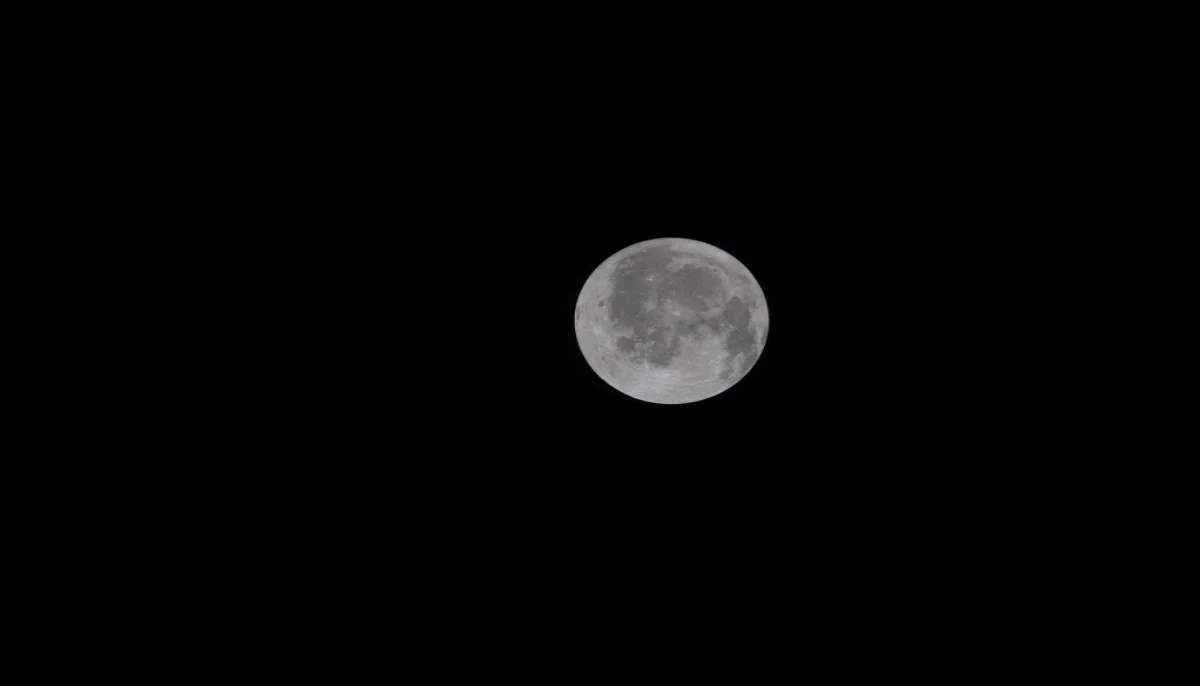
NASA released a photo taken by the Artemis crew on Sunday, showing a distant view of the moon with the Orientale basin clearly visible.
“This mission marks the first time the entire basin has been seen with human eyes,” NASA said. The enormous crater, which looks like a bullseye, had been previously photographed by orbiting cameras.
Talking live to Canadian children from space, astronaut Christina Koch expressed excitement about seeing the basin — sometimes called the moon’s “Grand Canyon.”
“It’s very distinctive, and no humans had seen this crater before today — we’re privileged to witness it firsthand,” Koch said during a Q&A session hosted by the Canadian Space Agency.
The next big milestone is expected overnight Sunday into Monday, when the crew will enter the moon’s “sphere of influence,” where the moon’s gravity will exert a stronger pull on the spacecraft than Earth’s.
If all goes well, as the Orion spacecraft circles around the moon, the astronauts—Americans Koch, Reid Wiseman, Victor Glover, along with Canadian Jeremy Hansen—could set a new record by traveling farther from Earth than any human before.
This journey is the first crewed lunar mission in over 50 years, a 10-day orbit around the moon and return that represents the second mission in NASA’s Artemis program, which succeeds the Apollo missions of the Cold War era.
The rocket launched on April 1 after facing multiple delays, including setbacks that required rolling it back to the hangar for analysis and repairs.
The Artemis team’s mission objectives include studying selected lunar sites and phenomena, with 10 priorities determined by NASA based on scientific interest.
During the flyby, which will last several hours, the crew will observe the moon both with their naked eyes and via onboard cameras.
Throughout the journey, NASA astronauts and Artemis II crew members have shared images—like a view of Earth taken by Wiseman after the translunar injection burn, or a sliver of Earth seen through the Orion window, illuminated against space’s blackness.
They’ve also participated in live streams and briefed Canadian children, showcasing space food and discussing their mission, all while passing the halfway point between Earth and the moon in their spacecraft.
One notable image shows Canadian astronaut Jeremy Hansen looking out of the Orion window on April 3, 2026, as the crew approaches the moon.
 ChatGPT
 Perplexity
 Gemini AI
 Grok AI