
Select Language:
The four Artemis II astronauts are now heading back to Earth aboard their Orion spacecraft after completing the world’s first crewed lunar mission in over 50 years. They are currently en route for a splashdown in the Pacific Ocean near Southern California. The mission’s conclusion will involve separating the Orion capsule from its service module, followed by a fiery re-entry into Earth’s atmosphere. A six-minute radio blackout is expected before the capsule deploys parachutes, gently landing in the ocean.
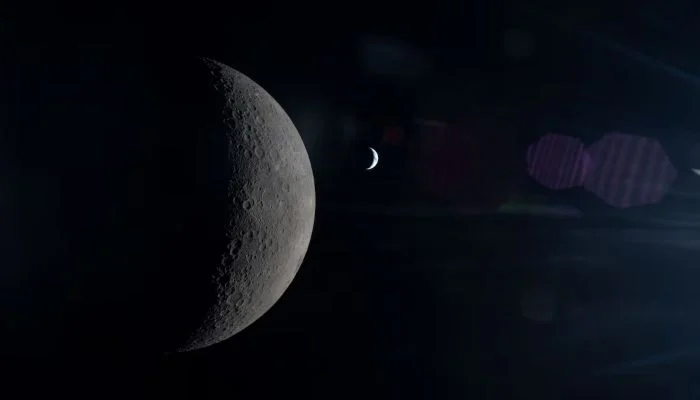
If everything proceeds as planned, U.S. astronauts Reid Wiseman, Victor Glover, and Christina Koch, along with Canadian astronaut Jeremy Hansen, will safely arrive in the water shortly after 8 p.m. Eastern Time (midnight UTC), off the coast of San Diego. The crew launched from Cape Canaveral, Florida, on April 1, using NASA’s powerful Space Launch System rocket. They initially orbited Earth, then traveled around the far side of the Moon, venturing farther into space than any humans before them.
Their journey was a historic milestone, as Glover, Koch, and Hansen made history as the first Black astronaut, the first woman, and the first non-U.S. citizen, respectively, to participate in a lunar mission. This mission followed the uncrewed Artemis I, which orbited the Moon in 2022, serving as a critical rehearsal for the upcoming lunar landing planned for later this decade—marking a return to the Moon since Apollo 17 in 1972. The ultimate aim of the Artemis program is to establish a sustained human presence on the Moon as a stepping stone toward eventually sending humans to Mars.
Runtime during the mission, set against a backdrop of global political and social unrest, as well as an unpopular U.S. military conflict, reinforced the achievements of science and technology. Public opinion polls suggest widespread support for the mission’s goals, highlighting a collective appreciation for advancements in space exploration amid societal challenges.
The re-entry phase will test Orion’s heat shield, which previously experienced unexpected stress and high temperatures during the 2022 test flight. To mitigate risks, NASA engineers adjusted the descent trajectory to reduce heat buildup and lower the chance of capsule damage. As Orion reenters the atmosphere at approximately 25,000 miles per hour (40,235 km/h), outside temperatures are projected to reach about 5,000°F (2,760°C). The refined descent path has also narrowed the possible splashdown area in case weather conditions are unfavorable, although current forecasts indicate suitable conditions for recovery.
Several critical factors are involved in the descent, including precise control of the spacecraft’s entry angle and path, achieved through a series of course corrections using onboard jet thrusters. The final burn of these thrusters is scheduled for Friday afternoon, about five hours before landing. Once the capsule begins its descent, it will only take around 15 minutes—including the six-minute blackout—to deploy parachutes and settle into the sea.
Recovery teams will then take roughly an hour to secure the capsule, retrieve it from the water, and assist the astronauts in exiting the craft one by one. During this mission, the crew reached a maximum distance of approximately 252,756 miles from Earth—surpassing the previous record of around 248,000 miles set by Apollo 13 in 1970.
 ChatGPT
 Perplexity
 Gemini AI
 Grok AI