
Select Language:
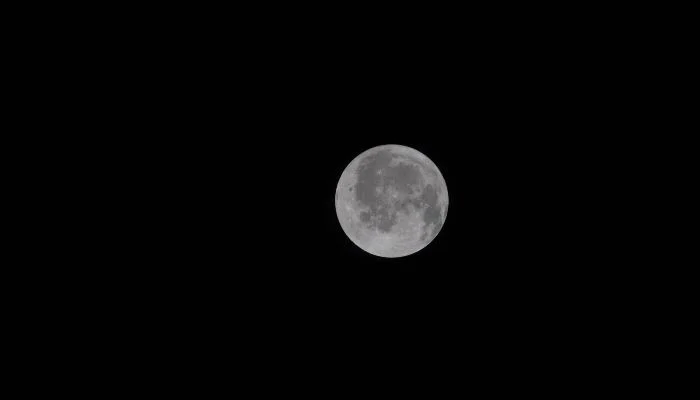
Astronauts will orbit the Moon on Monday for the first time in over 50 years, marking a key milestone in the Artemis 2 mission.
Here are the essentials:
Live Coverage
The lunar flyby, scheduled to last about seven hours, begins around 2:45 p.m. Eastern Time (6:45 p.m. GMT) and wraps up around 9:20 p.m. ET (1:20 a.m. GMT). NASA will broadcast the event live on its website, YouTube, Amazon, and Netflix, featuring commentary from the crew and mission control experts in Houston. Due to the vast distance — beyond any humans have traveled before — the quality of the livestream might occasionally dip.
Communication Blackout
There will be approximately 40 minutes during the flyby when all communication with Artemis 2 is cut off as the spacecraft passes behind the Moon. Derek Buzasi, an astronomy professor at the University of Chicago, described the moment as both exciting and a little nerve-wracking, recalling how during the Apollo missions, everyone held their breath when the astronauts went behind the lunar body.
Historic Achievements
This mission will make history by sending the first woman, Christina Koch, a Black astronaut, Victor Glover, and a non-American, Jeremy Hansen, to the Moon. All previous lunar visits, from 1968 to 1972, involved exclusively white American men — the Apollo crew. Just before passing behind the Moon, Artemis 2 will also set a new record for the furthest humans have traveled from Earth. The spacecraft is expected to go 4,102 miles (6,600 km) beyond the Apollo 13 record, reaching a maximum distance of about 252,757 miles (406,772 km).
Approaching the Moon
While Apollo missions flew roughly 70 miles (110 km) above the lunar surface, Artemis 2 will swing by over 4,000 miles (6,500 km) away, following a precise trajectory that doesn’t place it in orbit. This vantage point will let the crew see the entire visible surface of the Moon, including areas near the poles, with the Moon appearing roughly the size of a basketball held at arm’s length, as explained by NASA’s Noah Petro.
Invisible Side & New Views
During its pass behind the Moon’s far side — which cannot be seen from Earth — the crew will witness regions previously only imaged by robotic probes. Over years of training, the crew has prepared to identify and describe the lunar geology accurately. NASA hopes their observations will shed light on the Moon’s composition, its history, and extend insights into our solar system.
Solar Eclipse and Earth Observation
As the spacecraft nears the end of the flyby, the crew will experience a rare solar eclipse, during which the Moon, Sun, and spacecraft will align perfectly for about 53 minutes, momentarily blocking the Sun and revealing the Sun’s outer atmosphere, the corona. They will also observe potential meteorite impacts on the Moon’s surface.
The astronauts will see Earth disappear behind the Moon and then reappear, mimicking the famous “Earthrise” photo taken during Apollo 8 in 1968. That iconic image showed Earth suspended against the blackness of space, with the lunar surface in the foreground. The Artemis 2 crew has the opportunity to recreate this view, offering a powerful perspective on our planet.
 ChatGPT
 Perplexity
 Gemini AI
 Grok AI