Select Language:
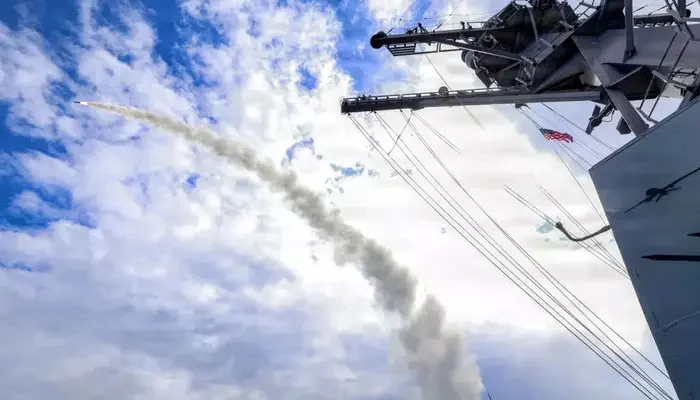
US forces have intercepted and shot down hundreds of Iranian ballistic missiles recently, prompting concerns about how long American air defense stocks will last in a conflict that could stretch on for weeks or more.
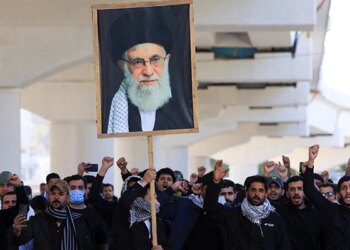
Iran responded to the extensive US-Israeli air campaign launched over the weekend by unleashing hundreds of missiles and drones on countries throughout the Middle East that host American forces and installations.
Since the conflict began, the United States has intercepted hundreds of missiles aimed at US personnel, allies, and regional stability, according to General Dan Caine, the top US military official, on Monday.
While these interceptions have successfully prevented the missiles from hitting their targets, they also rely on expensive, high-tech interceptors that are currently in limited supply.
“There’s a risk that the US and its allies could run out of interceptors before Iran depletes its missile stockpile, though it’s not a certainty,” explained Kelly Grieco, a senior researcher at the Stimson Center think tank.
Initially, Israel estimated Iran possessed approximately 2,500 ballistic missiles—”almost certainly exceeding the combined missile interception capacity of Israel and the U.S.,” Grieco noted.
However, both the US and Israel are conducting efforts to locate launchers and storage sites. “The race is essentially between Iranian missile launchers and American and Israeli strikes on those launch sites,” she added.
Demand for interceptors is now outpacing production. General Caine mentioned that Iranian drones also pose a threat but did not specify how many had been shot down, only stating that “our systems have proven effective against these platforms, engaging targets swiftly.”
Grieco emphasized that while drones are consuming interceptors, the most critical shortage currently is in ballistic missile interceptors.
The length of the conflict remains uncertain, and how long the US can sustain its missile defense efforts depends heavily on how long it continues. Former President Donald Trump has mentioned a multi-week war, though he also said Monday that “we’re already ahead of our projections.”
“Initially, we estimated four to five weeks, but we have the capacity to extend the fight if needed,” Trump stated.
Pentagon Secretary Pete Hegseth suggested timelines ranging from two to six weeks, noting that the situation could accelerate or slow down.
Joe Costa, who oversees defense programs at the Atlantic Council, warned that prolonged conflict with Iran could severely deplete US stocks of critical air defense interceptors, affecting both the China front and other global priorities.
“The key factor is how effective the US and Israel are in dismantling Iran’s missile and drone launch capabilities,” he said.
Grieco pointed out that manufacturing of interceptors simply can’t keep up with current demand. “Every theater—whether in Europe, the Indo-Pacific, or the Middle East—has an urgent need for missile defense systems, and the US is consuming them faster than we can produce more.”
 ChatGPT
 Perplexity
 Gemini AI
 Grok AI