
Select Language:
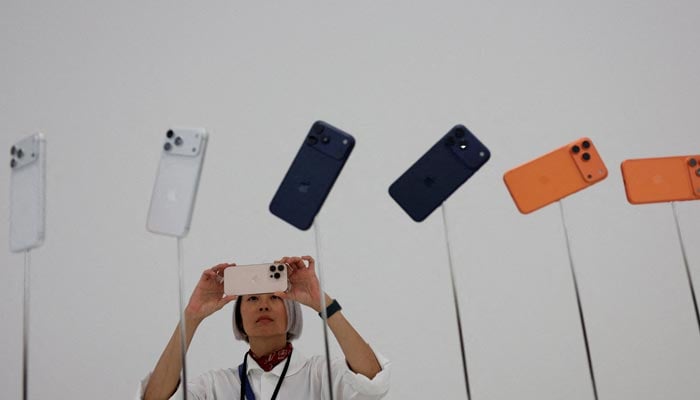
Apple has announced its iPhone 17 series, highlighting the thinnest smartphone ever made as the company aims to stay competitive in the AI-powered device market. The unveiling took place at the Steve Jobs Theater in Cupertino, with a focus on innovation amid rising external pressures. The U.S. government has been urging Apple to diversify its manufacturing away from China, and investors are scrutinizing whether the company is prepared for breakthroughs in artificial intelligence.
Adding to these complexities, President Trump’s tariffs have increased production costs, leading to a stock decline of over 3% since the GOP took office in January. In response, Apple is banking on a new flagship that could ignite a wave of upgrades, encouraging consumers to replace their phones sooner rather than later.
Gadjo Sevilla, an analyst at Emarketer, noted that the event allowed Apple to sidestep the intense AI race while positioning itself as a future leader in AI hardware, emphasizing silicon and device integration. To refresh its brand image, Apple introduced the iPhone 17 Air, which CEO Tim Cook described as “a complete game changer.” The device, just 5.6mm thick and priced at $999, features Apple’s latest A19 Pro chip—the most powerful in its history—and offers up to 40 hours of video playback on a single charge.
Alongside the Air, the lineup includes the premium iPhone Pro 17, designed for high performance and cost, but all these new models contain AI functionalities. However, Apple didn’t make any significant announcements about expanding AI features beyond incremental updates to its existing “Apple Intelligence” suite. The company’s AI efforts have struggled to gain momentum since the suite’s launch last year, especially with Siri, which remains surprisingly basic despite ongoing promises of improvement.
Rumors suggest Apple plans to integrate AI more deeply into internet searches next year and to overhaul Siri, but official confirmation has yet to be given. The company is also rumored to be collaborating with Google to leverage its search and AI expertise. Thomas Husson, a Forrester analyst, pointed out that for Apple to truly stand out, it needs to develop AI as a seamless, contextual user interface across its devices—a strategy likely requiring time, potentially not materializing until the 20th anniversary of the iPhone in 2027.
Industry experts view the iPhone Air as a strategic shift. The ultra-slim design, emphasizing portability over larger screens, could lead to a foldable iPhone, possibly launching as early as next year. While competitors like Samsung and Huawei already offer foldable smartphones, engineering such thin devices poses challenges due to higher manufacturing costs and limited battery capacity. Despite this, Apple asserts the iPhone 17 Air will last a full day on a single charge.
Despite tariff-related increases in production expenses, Apple maintained its iPhone prices at last year’s levels—an unusual move that might compress profit margins. Cook revealed that Trump’s tariffs cost Apple roughly $800 million last quarter, with an estimated additional $1.1 billion impact expected this quarter. Following the price announcement, Apple’s stock fell 1.4%, reflecting concerns about profitability.
The company also introduced the AirPods Pro 3, which features improved noise cancellation and real-time translation. Additionally, the upcoming Apple Watch Series 11 will include 5G connectivity, longer battery life, and new health monitoring features, pending regulatory approval.
 ChatGPT
 Perplexity
 Gemini AI
 Grok AI