Select Language:
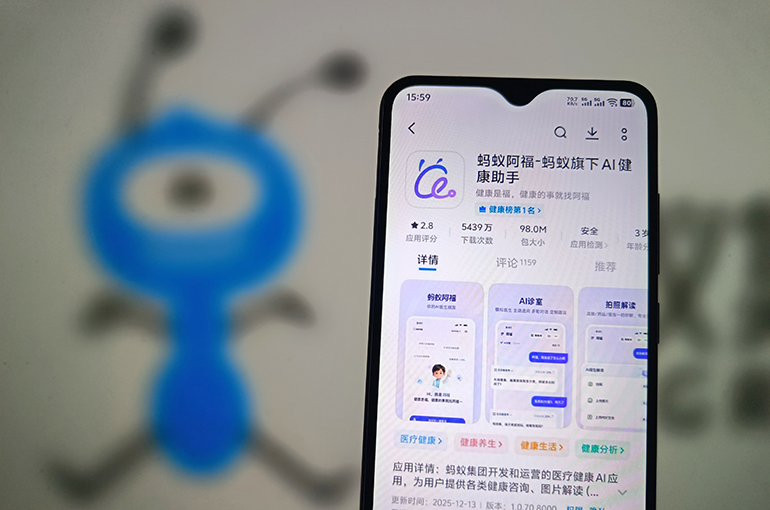
December 17 — A leading Chinese fintech company’s AI-powered health management app, recently renamed from AQ to a new brand, has become the most widely used AI healthcare application in China, measured by user base.
The app’s monthly active users have surpassed 15 million, with approximately 55 percent coming from third- or lower-tier cities, based on official figures.
Initially, health management apps were viewed as low-frequency tools within the online ecosystem, as users typically turn to them only when they are unwell. However, with the rapid advancement of AI technology, major Chinese online consultation platforms are increasingly becoming popular points of access for users with frequent health inquiry needs.
“Internet companies are competing to gather data from various entry points,” said a senior online healthcare expert. “They are actively forming collaborations with top hospitals while also focusing on attracting more patients, aiming to convert infrequent medical visits into routine health consultations and inquiries.”
The more consultation data that is uploaded, the better these health management apps can train large language models for AI. “The development of these advanced language models marks a technological frontier that platforms are competing to dominate, and it will play a vital role in future revenue streams in certain areas,” the expert added.
Approximately 70 percent of patient inquiries are basic questions related to pregnancy, which tend to be repetitive, said Duan Tao, director of the Obstetrics and Gynecology Department at Shanghai East Hospital. AI health apps can ease some of this repetitive workload for doctors and help partners of expectant mothers to participate more actively in healthcare processes, he explained.
Duan’s AI avatar on the app has completed 160,000 consultations, with 24 percent of users being male.
More than 500 prominent Chinese doctors have created AI avatars on the platform. These virtual representatives have handled over 27 million healthcare inquiries to date.
China’s healthcare market is projected to surpass CNY 20 trillion (around USD 2.8 trillion) this year. As traditional healthcare service models struggle to meet the increasing and varied demands, AI health management apps are emerging as significant growth opportunities.
It’s important to note that these apps serve only as supportive tools for health management and do not perform diagnostic or treatment procedures. Medical interventions such as prescribing medications, conducting examinations, or performing surgeries must still be carried out by licensed healthcare professionals.
 ChatGPT
 Perplexity
 Gemini AI
 Grok AI