Select Language:
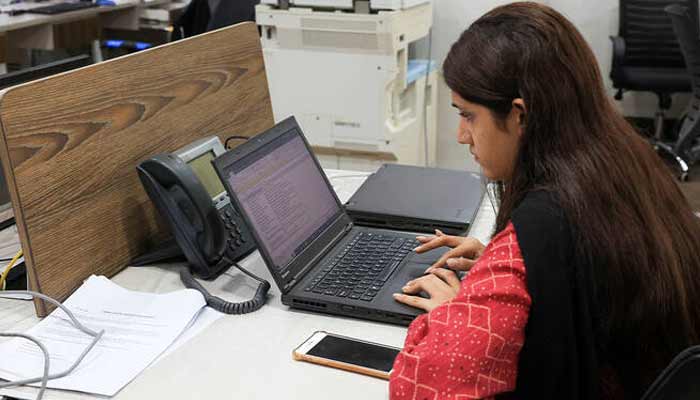
Families behind those numbers tell stories worth knowing. In Multan, a mother working from home as a graphic designer can’t leave her house. In Faisalabad, a 23-year-old sends money via Upwork to support three siblings. A recent graduate in Lahore chose freelancing over traditional careers because it’s more profitable at the entry level.
AI is poised to transform all of this.
Here’s what has already happened: Klarna introduced an AI assistant in February 2024, managing 2.3 million conversations in its first month—equivalent to the work of 700 full-time employees. Customer resolution times plummeted from 11 minutes to under 2, promising a $40 million boost in profits for the year.
But that wasn’t just a test run. It was a replacement. By May 2025, Klarna’s CEO acknowledged they had overstepped, causing quality to decline. They began rehiring human agents, but many of these jobs reappeared only as gig roles, never at the same scale as before.
Similarly, Dukaan announced in July 2023 that AI replaced about 90% of its support staff. Their first response time went from nearly 2 minutes to instant, slashing costs by 85%.
Teleperformance, one of the world’s largest BPO companies, saw its stock value drop by nearly 30 in a single day after Klarna’s shift, hitting a seven-year low—markets had already anticipated this change.
The platforms Pakistani freelancers rely on are also crumbling. Fiverr, which hosts millions of Pakistani freelancers, has seen its stock decline over 60% in the past year. It’s now valued at just $445 million—barely above its cash reserves—after layoffs and a shift back to a “startup mode.” Active buyers dipped from 3.6 million to 3.1 million in a year because companies are turning to AI tools for design, writing, and coding tasks.
Upwork’s stock also fell sharply after projecting lower gross service volume, with active clients decreasing by 6%. Both platforms are trying to pivot to AI services, but the decline of the traditional freelance model is already evident.
These aren’t just charts—they’re the backbone of Pakistan’s digital economy. Over 2.3 million freelancers, mainly working from modest homes, provide critical income. When AI disrupts those jobs, entire households are silently affected.
Women, who make up approximately 28% of Pakistan’s digital skills trainees and are a core part of freelancing, face the greatest threat. Freelancing allowed many women to participate economically without unsafe commutes or cultural barriers. Now, AI threatens to erase the most promising path to their economic inclusion.
Most of these affected freelancers are young—between 22 and 30—supporting families with no safety nets. When their income disappears, there’s no headline, no boss firing them—just quiet household hardship.
Embracing AI isn’t the enemy. I’ve long advocated for Pakistan to adopt blockchain, crypto, and AI as engines for economic growth. But there’s a stark difference between adoption and negligence. The reality is that over 2.3 million Pakistanis and their families are already feeling the impact, many without warning. We need to proactively convert our BPO centers into AI operation hubs, invest in retraining for AI-adjacent roles like prompt engineering or workflow management, and establish a dedicated transition fund.
The urgency isn’t decades away. The tipping point is happening now. We’ve already begun losing ground.
We must start discussing this immediately.
 ChatGPT
 Perplexity
 Gemini AI
 Grok AI