Select Language:
Afghanistan is making efforts to expand its trade network after a deadly border conflict with Pakistan last month drove relations to their lowest point in years. The longstanding dispute between the two neighbors has intensified since the Taliban assumed control of Kabul in 2021, with Pakistan accusing Afghanistan of sheltering militants behind cross-border assaults.
Last week, Abdul Ghani Baradar, Afghanistan’s deputy prime minister for economic affairs, urged traders to “seek alternative routes” instead of relying solely on Pakistan. Pakistan, being landlocked, is Afghanistan’s primary trading partner, supplying essentials like rice, medicines, and raw materials, and accepting about 45% of Afghan exports in 2024, according to the World Bank.
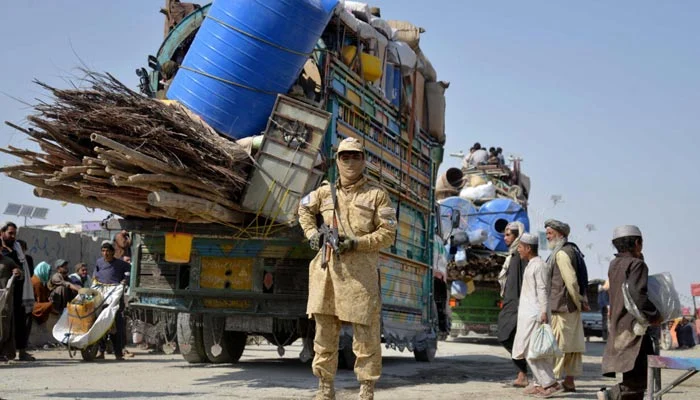
A significant portion of these exports, over 70%, valued at $1.4 billion, are perishable agricultural products such as figs, pistachios, grapes, and pomegranates. When the border was closed on October 12 following cross-border violence, dozens of Afghan trucks transporting these goods were stranded and spoiled, resulting in losses exceeding $100 million for both nations. Approximately 25,000 border workers have been impacted, according to the Pakistan-Afghanistan Joint Chamber of Commerce and Industry (PAJCCI), which promotes bilateral trade.
Baradar warned traders that Afghanistan wouldn’t intervene if reliance on Pakistan persists. To avoid further disruptions, the Taliban government is now exploring trade opportunities with Iran, Central Asian countries, and beyond.
Trade with Iran and Turkmenistan has surged by 60-70% since mid-October, according to Mohammad Yousuf Amin, head of Herat’s Chamber of Commerce in western Afghanistan. Additionally, Kabul recently exported apples and pomegranates to Russia for the first time. Russia is the only country to have officially recognized Afghanistan’s Taliban-led government.
Despite these ambitions, Taliban leaders seek broader recognition and foreign investment, but sanctions imposed on senior officials have made many investors cautious. The large market in India remains a key target; recently, Afghan airline Ariana Afghan Airlines reduced freight rates to India, and Kabul dispatched its commerce and industry minister to New Delhi.
Economic analyst Torek Farhadi noted, “Afghanistan produces an excess of fruits and vegetables it cannot store due to the lack of refrigerated warehouses, so exporting remains the only viable option— and it needs to be done quickly before the products spoil.” Farhadi also pointed out that Iran’s Chabahar port, seen as an alternative to Pakistan’s southern ports, is farther away, more expensive, and hindered by U.S. sanctions on Iran.
Both countries recognize that ending the trade war would benefit everyone. Farhadi emphasized, “They need each other,” but Pakistan maintains that the border closure was a necessary move to curb militant infiltration. Pakistan’s foreign ministry spokesperson, Tahir Hussain Andrabi, stated last Friday that Islamabad’s “patience has reached its limit” following recent attacks, describing the situation as a difficult choice between risking life and economic activity. “Can you put a price on human lives?” he questioned.
In Peshawar, near the border, Afghan produce has almost disappeared from markets. Prices for grapes have quadrupled, and tomatoes now cost over twice as much at more than 200 rupees (about 70 cents) per kilogram, according to AFP reports.
On Monday, PAJCCI called on Islamabad to take action, warning that ongoing port congestion is costing both economies heavily. Each stuck shipping container incurs port charges of $150 to $200 daily, and thousands of containers are delayed, creating an unbearable economic burden that grows daily.
Naeem Shah, a 48-year-old truck driver waiting at the Chaman border with supplies bound for Afghanistan, voiced frustration: “I haven’t been paid in a month. No matter who I call, they say there’s no money because the border is closed. If it doesn’t reopen, we’ll be devastated.”
 ChatGPT
 Perplexity
 Gemini AI
 Grok AI