Select Language:
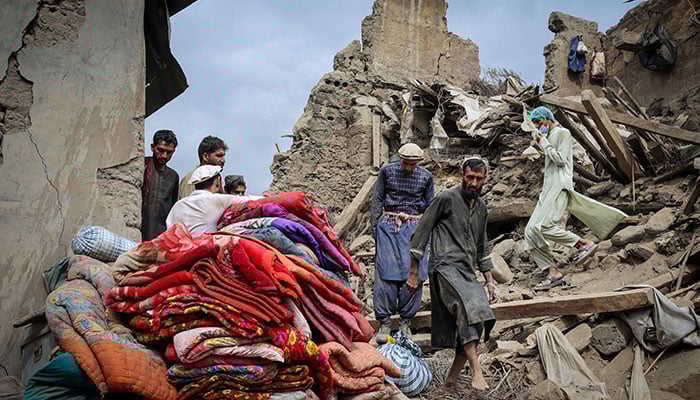
Afghan men walk across the wreckage of a damaged home following a devastating magnitude-6 earthquake that hit Afghanistan on Sunday, in Mazar Dara, Kunar Province, September 2, 2025. — Reuters
The death toll from the strong earthquake that struck eastern Afghanistan over the weekend has climbed sharply to more than 2,200, making it the deadliest quake in decades for the country. Most fatalities occurred in Kunar Province, where 2,205 people lost their lives, and 3,640 were injured, according to Taliban authorities. In neighboring Nangarhar and Laghman provinces, 12 more individuals were killed, with hundreds more injured. The total count is expected to rise as rescue teams continue to recover bodies from the debris.
“Hundreds of bodies have been pulled from collapsed houses during rescue operations,” stated Deputy Government Spokesperson Hamdullah Fitrat on Thursday via X (formerly Twitter). He emphasized that rescue operations are still underway. Difficult terrain and repeated aftershocks have caused landslides, blocking vital mountain roads and delaying relief efforts.
Several countries have dispatched aid to the region. However, many villagers remain stranded outdoors in Nurgal district, huddled under tarps made from debris, uncertain about where their next meal will come from. Tensions flared over food supplies when some aid finally arrived at the camp in Mazar Dara, where hundreds of displaced residents are camped, with little assistance reaching them so far.
“Yesterday, some brought food, but everyone rushed to it. People are hungry—many haven’t eaten in a long time,” said Zahir Khan Safi, 48.
“Every hour counts,” warned WHO officials.
The fragile infrastructure—damaged by decades of conflict—complicates emergency response efforts. The World Health Organization reports the country’s healthcare system is under immense pressure, facing shortages of trauma supplies, medications, and staff. They have appealed for $4 million to fund emergency medical interventions, mobile health units, and supply distribution.
“The loss of U.S. aid since January has worsened the depletion of emergency stocks and logistics resources,” officials note. Humanitarian organizations and the UN stress that Afghanistan’s crisis is multi-layered, with ongoing economic hardship, drought, and an influx of refugees from Pakistan and Iran compounding the disaster.
Filippo Grandi, head of the UN Refugee Agency, estimated that more than 500,000 people in eastern Afghanistan have been affected by the quake.
The country continues to grapple with pervasive poverty, severe drought, and the challenges posed by returning refugees. Meanwhile, neighboring Pakistan has begun a renewed effort to expel Afghan nationals, with over 6,300 crossing the Torkham border into Nangarhar Province just yesterday.
 ChatGPT
 Perplexity
 Gemini AI
 Grok AI