
Select Language:
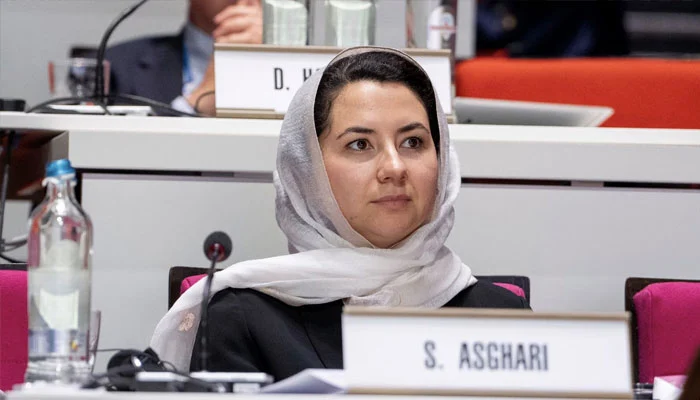
Afghanistan’s IOC member Samira Asghari has stated to AFP that the Taliban must confront the reality that gaining international acceptance requires respecting women’s rights to education and sports. Living in exile for the second time, she favors engaging with Afghanistan’s current rulers.
The Taliban government has banned girls from attending school past age 12, prohibited women from working in most sectors and participating in public life, and barred women from sports activities. As the first Afghan IOC member, elected in 2018, Asghari admits her situation is quite difficult and that advocating for women’s sports involves certain risks. Still, she remains committed to speaking out against the treatment of women under Taliban rule.
“In taking a public stand for women’s rights, I know I become a target, but I believe open communication and dialogue are essential,” she shared via email. She emphasizes that as long as the Taliban controls Afghanistan, action cannot be postponed. Her efforts include mediating discussions between the IOC and the Taliban, focusing particularly on the rights of women and girls, including primary school students still inside the country.
Born to a retired professional makeup artist mother and a father who managed Afghanistan’s Olympic committee, Asghari says these talks aren’t about legitimizing the Taliban government but about creating real opportunities for future generations of Afghan children.
Regarding progress, she notes that organizing Afghan women’s teams overseas is complex. Nonetheless, Afghan Women United, a team comprising players based in Europe and Australia, recently competed in FIFA Unites: Women’s Series 2025 in Morocco. She hopes FIFA continues to support these athletes alongside ongoing IOC discussions with Taliban officials.
She criticizes the Taliban’s ongoing efforts to cling to power without addressing fundamental human rights violations, especially concerning women. “Their long-term rule is unsustainable without respecting human rights, including women’s rights to education and sports,” she insists.
Attending the recent Islamic Solidarity Games in Riyadh, where Afghan athletes competed, Asghari expressed hope for small openings in Taliban policies. Developing sports programs in primary schools—where girls may still attend up to sixth grade—is one such opportunity. It’s not about capitulating to restrictions but about not abandoning Afghan women and girls altogether. She believes working within the current realities while advocating for lasting change is vital.
She reflects on the devastating impact of losing years of education on Afghan women, recalling a girl who was 20 and unable to attend school during Taliban rule, sitting next to her in sixth grade, and the pain of that lost time. Seeing this cycle repeat deeply troubles her.
Despite bleak circumstances, Asghari remains optimistic about future engagement, emphasizing the importance of continued dialogue with the Taliban. Her message is clear: “The future belongs to Afghanistan’s youth. We must give them every chance possible and never give up hope.”
 ChatGPT
 Perplexity
 Gemini AI
 Grok AI