Select Language:
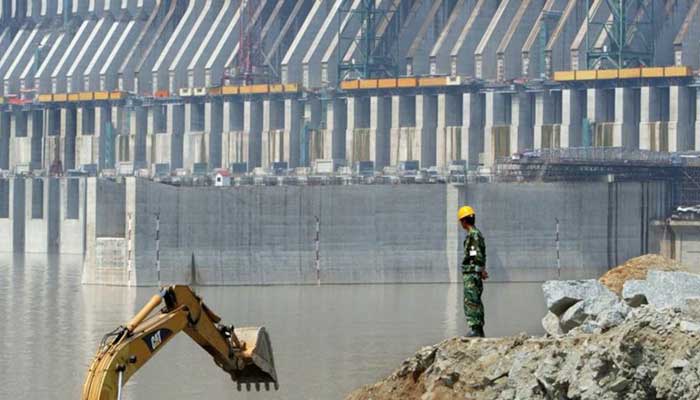
HONG KONG/SHANGHAI: China’s Premier Li Qiang has announced the start of construction on what will be the largest hydropower dam in the world. Located on the eastern edge of the Tibetan Plateau, the project’s estimated cost is around $170 billion, according to the official Xinhua News Agency.
This dam is China’s most ambitious hydropower initiative since the Three Gorges Dam on the Yangtze River, with plans for operations to commence sometime in the 2030s.
The project consists of five cascading hydropower stations situated in the lower stretches of the Yarlung Zangbo River. A portion of the river drops an impressive 2,000 meters (about 6,561 feet) over just 50 kilometers (about 31 miles), significantly enhancing its hydropower capabilities.
Concerns have already been raised by India and Bangladesh regarding the potential impacts on millions of people living downstream, while environmental organizations warn about the risks to one of the region’s most diverse ecosystems.
According to Beijing, the dam, which is expected to generate 300 billion kilowatt-hours of electricity each year, will help meet energy demands in Tibet and across China without significantly affecting downstream water supplies or the environment.
Following the announcement, China’s CSI Construction & Engineering Index surged by as much as 4%, reaching a seven-month high. Companies such as Power Construction Corporation of China and Arcplus Group PLC also saw their stock prices rise by the daily maximum of 10%.
Wang Zhuo, a partner at Shanghai Zhuozhu Investment Management, noted that the project presents both long-term investment opportunities and a potential theme for short-term trading. “From an investment standpoint, established hydropower projects offer bond-like returns,” Wang remarked.
However, he cautioned that speculative buying in related stocks spurred by the announcement could lead to inflated valuations.
According to a note from Huatai Securities, the project will increase the demand for construction materials such as cement and civil explosives, thus benefiting relevant companies. Shares of Hunan Wuxin Tunnel Intelligent Equipment Co., which produces tunnel construction equipment, rose by 30%. Similarly, shares of Geokang Technologies Co Ltd, which manufactures monitoring devices, also jumped significantly. Cement manufacturer Xizang Tianlu Co Ltd and Tibet GaoZheng Explosive Co, producing civil explosives, both hit their maximum allowable increase of 10%.
Impact Downstream
The Chinese Premier characterized the dam as a “project of the century” and emphasized that “special care must be taken for ecological preservation to prevent environmental damage,” as reported by Xinhua.
China has not released estimates on how many jobs the project might create. The Three Gorges Dam, which took nearly 20 years to complete, generated close to a million jobs, according to state media, although a similar number of individuals were displaced by the massive undertaking.
Authorities have yet to disclose how many people might be displaced by the Yarlung Zangbo project or its implications for local ecosystems.
Non-governmental organizations, including the International Campaign for Tibet, warn that the dam could inflict irreversible damage on the Tibetan Plateau and disrupt the livelihoods of millions downstream.
The Yarlung Zangbo, which flows south into India, transforms into the Brahmaputra River, passing through the states of Arunachal Pradesh and Assam before reaching Bangladesh.
China has already initiated hydropower generation in the upper regions of the Yarlung Zangbo, which flows from the western to the eastern parts of Tibet.
 ChatGPT
 Perplexity
 Gemini AI
 Grok AI