Select Language:
- The Boeing 787 crash resulted in the deaths of 260 individuals last month.
- The pilots were experienced, but it’s unclear why the fuel switches activated.
- One pilot questioned the other about shutting off the fuel.
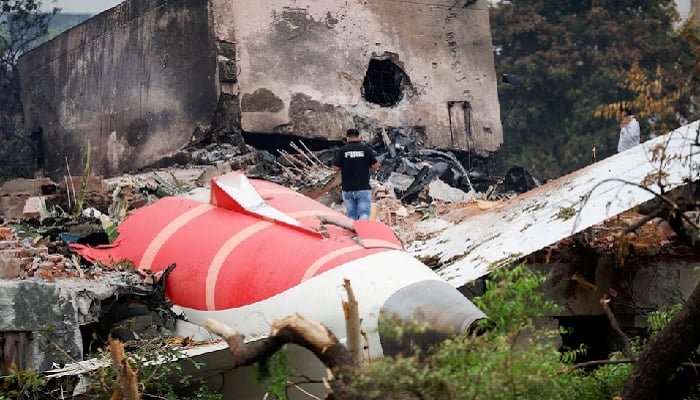
A preliminary report has revealed confusion in the cockpit moments before an Air India jetliner crashed, leading to 260 fatalities last month. The plane’s engine fuel cutoff switches appeared to have flipped almost simultaneously, cutting fuel to the engines.
The Boeing 787 Dreamliner was on its way to London from Ahmedabad when it suddenly lost thrust and began to descend, according to Indian accident investigators who released their findings on Saturday—the deadliest aviation incident in a decade.
This report from India’s Aircraft Accident Investigation Bureau (AAIB) about the June 12 crash shortly after takeoff raises concerns over the positioning of the vital engine fuel cutoff switches, suggesting that neither Boeing nor the engine manufacturer GE was at fault.
The crash poses a significant challenge for Tata Group as it seeks to enhance Air India’s image and modernize its fleet after acquiring the airline from the government in 2022.
CCTV footage shows that shortly after takeoff, a backup energy device known as a ram air turbine deployed, indicating a loss of engine power.
In the flight’s last moments, one pilot is heard asking the other why he had cut off the fuel, to which the co-pilot replied that he hadn’t done so, according to the report. The report did not specify which comments were made by the captain or the first officer, nor did it clarify who issued the “Mayday” call just prior to impact.
The pilot in command was Sumeet Sabharwal, 56, with over 15,600 flight hours and known to have served as an instructor for Air India. His co-pilot, Clive Kunder, 32, had approximately 3,400 flight hours.
The fuel switches were found to have flipped from ‘run’ to ‘cutoff’ just after takeoff. The preliminary report did not explain how this could have occurred during the flight.
Aviation experts have raised doubts about the likelihood of a pilot unintentionally moving the fuel switches. “If they were moved by a pilot, the question is why?” questioned U.S. aviation safety expert Anthony Brickhouse.
The report indicated that the switches were activated just a second apart, which aligns with the time it would take to toggle each one manually, as noted by aviation expert John Nance. He remarked that a pilot typically would never switch off the fuel during ascent.
Activating the cutoff switch almost immediately halts the engines and is generally used to turn off engines once a plane has arrived at the gate or in specific emergencies, such as an engine fire. The report did not mention any emergency situation necessitating an engine shutdown.
At the crash site, both fuel switches were discovered in the ‘run’ position, and there were indications that both engines relit before the crash at low altitude. The report was published at 1:30 AM IST on Saturday (8:00 PM GMT Friday).
Air India has acknowledged the report in a statement, noting their cooperation with Indian authorities but refraining from further comments.
The U.S. National Transportation Safety Board expressed gratitude to Indian officials for their collaboration and stated that no recommended actions were aimed at operators of Boeing 787s or GE engines based on the report.
The U.S. Federal Aviation Administration emphasized its commitment to following the facts of the situation and addressing any identified risks promptly.
Boeing stated that it would continue to support the investigation and its client, Air India. GE Aerospace has yet to respond to inquiries for comment.
Investigation Developments
The AAIB, part of India’s civil aviation ministry, is leading the investigation into the crash, which claimed nearly all 242 lives on board plus an additional 19 individuals on the ground.
Most aviation accidents are attributed to multiple factors, with a preliminary report required within 30 days of the incident per international guidelines and a final report expected within a year.
The aircraft’s black boxes, which include cockpit voice and flight data recorders, were retrieved shortly after the crash and later analyzed in India. These devices provide essential data such as altitude, airspeed, and final communications between pilots, which narrow down potential causes of the accident.
Air India has faced heightened scrutiny following the crash.
The European Union Aviation Safety Agency plans to investigate Air India Express, its budget airline, after reports emerged that the carrier failed to swiftly comply with directives to change engine components of an Airbus A320 and had falsified records to indicate adherence.
India’s aviation regulatory body has also reprimanded Air India for violating rules regarding the operation of three Airbus aircraft with overdue escape slide checks, and in June, it was warned about “significant violations” related to pilot duty hours.
India is optimistic about an aviation boom to fuel broader development goals, aiming to transform the country into a job-generating global aviation hub similar to Dubai, which currently manages a significant portion of its international traffic.
 ChatGPT
 Perplexity
 Gemini AI
 Grok AI