Select Language:
TikTok Plans US-Specific App Amid Data Security Concerns
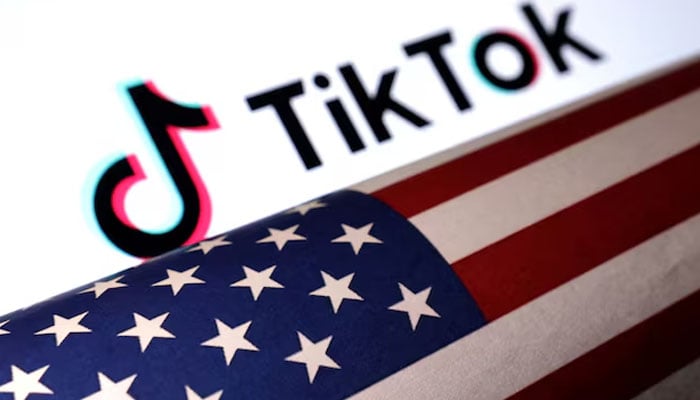
In a significant move, TikTok is gearing up to roll out a separate app tailored for US users. This new app is expected to function on a distinct algorithm and data system, marking a strategic shift that could pave the way for a potential sale highlighted by the administration of former President Donald Trump.
Recent insider reports indicate that, over the past few months, TikTok’s team has been working diligently under tight timelines to create this US-exclusive version. They’re undertaking a complex task of transferring and replicating the app’s core code, as well as essential AI models, algorithms, features, and user data from the global platform. Employees who requested anonymity shared these details with Reuters.
This initiative could provide a resolution to long-standing discussions over whether the company would disclose its highly sought-after recommendation algorithm, a central issue in the US-China tech rivalry.
Both ByteDance and TikTok have opted not to comment on these developments.
Internally dubbed “M2,” the project is aiming for a September launch. This could represent the most significant technological division between TikTok’s US operations and its international presence to date. This change will likely alter how approximately 170 million US users experience global content, and it might also impact revenue for creators from outside the US.
The US-only application is designed to be autonomous, mirroring Douyin—the Chinese version of TikTok. Reports suggest that users outside the US will not be able to access this American app in their app stores.
For the first time, specifics about the upcoming US app are emerging, with The Information being the first to disclose news about its planned launch.
While existing content is expected to migrate to the new app, the integration of new global content into the US version remains uncertain. This new iteration is anticipated to rely solely on data from US users to refine its recommendation algorithms, thereby distancing itself further from TikTok’s international systems. Consequently, users will primarily receive content generated within the US.
The Drive for Separation
Efforts to detach TikTok’s US app from its global platform have been gaining momentum in recent months. ByteDance leaders have been formulating various strategies to avert a potential ban on the app in the US, prompted by recent legislation driven by data security worries.
The application’s future has been uncertain since a law passed in 2024, which necessitated that ByteDance divest from TikTok by January 19. Officials in Washington have expressed that TikTok’s ownership by ByteDance ties it to the Chinese government, raising fears that the app could facilitate influence campaigns against the US and collect data on American citizens.
Following an initial deadline and a brief period of silence in January, TikTok began the process of relocating non-US user data from American data centers managed by Oracle, ensuring that only US user data was retained within US servers. This move set the stage for separating US and international operations.
Additionally, the company has been working on disentangling its core algorithm’s codebase since last year, a plan initially reported by Reuters but later denied by the company.
Once the separation is complete, ongoing technology management and development will be conducted independently of the global TikTok team, although some ByteDance employees might still provide support to TikTok US on an outsourced basis.
This initiative has provoked internal worries about whether the US algorithm’s effectiveness will endure in the long run, particularly as TikTok currently benefits from ByteDance’s vast global engineering talent and expertise.
Amidst ongoing political pressure in Washington urging ByteDance to divest its US branch, there were plans earlier this spring to convert TikTok’s US operations into a new American-owned entity. However, discussions were stalled after China indicated it would not approve the move following Trump’s announcement of substantial tariffs on Chinese imports.
If a deal materializes, the new app would likely be jointly owned by an American investor consortium and ByteDance, with ByteDance retaining a minority stake.
The consortium, which is currently leading the charge, includes existing ByteDance shareholders such as Susquehanna International Group (SIG), General Atlantic, and KKR, along with new investors like Blackstone and Andreessen Horowitz. Oracle is also expected to take a stake.
However, uncertainties linger regarding whether Beijing will allow the plan to replicate the algorithm or approve the sale of TikTok’s US operations.
During earlier negotiations, Chinese officials demonstrated significant reluctance to permit the export of TikTok’s recommendation algorithm, viewed as a valuable asset critical to its global success.
Back in 2020, when the Trump administration first proposed a sale of TikTok’s US operations, China updated its export control regulations to encompass technologies like recommendation algorithms, thereby giving the government a say in any transfer.
At that time, TikTok’s management viewed the proposal to isolate its US operations as detrimental to both its users and the global network, according to sources familiar with the decision.
Now, the ongoing discussions about TikTok’s future are intertwined with President Trump’s broader trade negotiations with China regarding tariffs.
Last week, Trump stated he would restart discussions with China about a TikTok deal. Although he expressed skepticism about obtaining Beijing’s approval, he added that “the deal could be beneficial for both China and us.”
 ChatGPT
 Perplexity
 Gemini AI
 Grok AI