Select Language:
- Indian Army official calls for urgent air defense enhancements.
- Singh did not specify how India obtained intelligence from China.
- Pakistan stated they were aware of India’s key positions.
NEW DELHI: An Indian Army official reported on Friday that during a recent deadly conflict with Pakistan in May, China provided real-time intelligence regarding crucial Indian military positions. This revelation has prompted calls for immediate upgrades to India’s air defense systems.
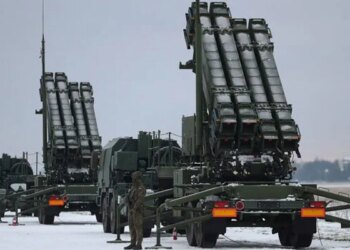
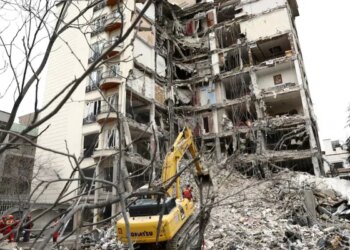
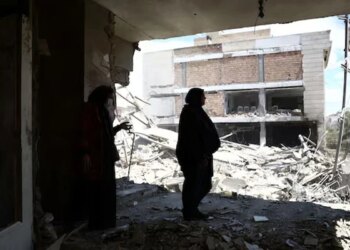
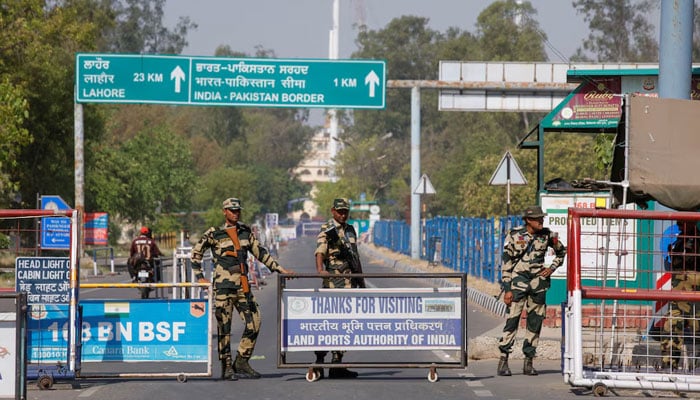
In the four-day clash, the two nuclear nations employed missiles, drones, and artillery, marking one of their most significant hostilities in decades. The conflict was ignited by an attack in April that targeted Hindu tourists in Indian-administered Jammu and Kashmir (IIOJK), an incident New Delhi attributed to Islamabad. Pakistan, however, denied any involvement and a ceasefire was eventually reached.
Lieutenant General Rahul Singh remarked during a defense industry event in New Delhi that India faced two adversaries during the conflict: Pakistan serving as the “front face,” while China provided “full support.”
“During talks at the DGMO (Director General of Military Operations) level, Pakistan indicated they had live updates on important Indian military positions, claiming they were receiving real-time information from China,” Singh stated.
Nonetheless, he did not elaborate on how India acquired knowledge of the intelligence from China.
India’s relationship with China has been tense since a border clash in 2020 that led to a military standoff lasting four years, although there have been signs of easing tensions following a withdrawal agreement in October.
Previously, India acknowledged that while Pakistan maintains a close alliance with China, there was no concrete evidence of direct assistance from Beijing during the conflict. When questioned about China’s potential provision of satellite imagery or other forms of real-time intelligence, India’s chief of defense staff noted that such images could be procured commercially from various sources, including China.
Pakistani officials have rejected claims of receiving active Chinese support during the clash. Nonetheless, since 2013, Beijing has bolstered Pakistan’s struggling economy with investments and financial assistance.
In a show of solidarity, the Chinese foreign minister assured his Pakistani counterpart of China’s support for maintaining Pakistan’s sovereignty and territorial integrity shortly after the ceasefire.
Additionally, Singh alleged that Turkey also provided significant assistance to Pakistan during the conflict by supplying drones, including Bayraktars, and training personnel.
Turkey has historically maintained strong ties with Pakistan and expressed its backing during the recent conflict, leading to calls among Indians to boycott Turkish products, including coffee and travel.
The Turkish defense ministry has yet to respond to a request for comment from Reuters.
The Conflict
Last month, tensions erupted between Pakistan and India following the attack in Pahalgam, IIOJK. In retaliation for what they termed Indian aggression, the Pakistani armed forces launched a large-scale military operation called “Operation Bunyan-um-Marsoos,” which targeted numerous Indian military installations across various regions.
During the hostilities, Pakistan managed to down six Indian fighter jets, including three Rafales, along with several drones. After approximately 87 hours, the conflict concluded on May 10 with a ceasefire brokered by the United States.
U.S. President Donald Trump first announced the ceasefire on social media following intercessions with both nations; however, India disputes Trump’s assertion that it was solely due to his influence and threats regarding trade negotiations.
In contrast, Pakistan has recognized Trump’s mediatory efforts, formally nominating him for the 2026 Nobel Peace Prize for his role in reducing tensions between the two countries last month.
 ChatGPT
 Perplexity
 Gemini AI
 Grok AI