
Select Language:
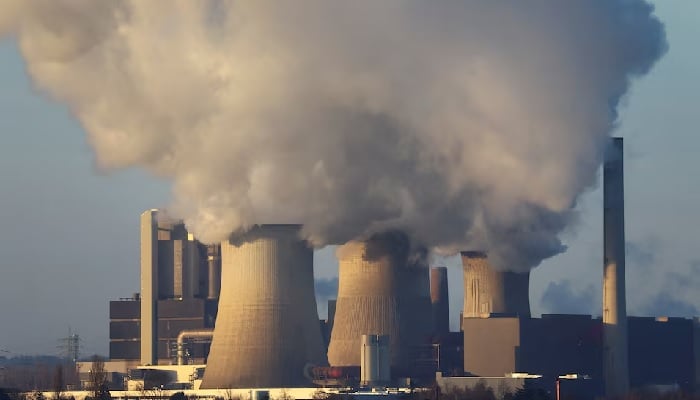
Last year, global carbon dioxide emissions from the energy sector reached an all-time high for the fourth consecutive year, as reliance on fossil fuels continued to increase, despite a surge in renewable energy use, according to the Energy Institute’s annual global energy statistics released on Thursday.
Significance
The data underscores the difficulties in shifting the global economy away from fossil fuels amid the ongoing conflict in Ukraine, which has altered oil and gas distribution patterns from Russia, as well as concerns regarding supply security due to tensions in the Middle East.
2023 was also recorded as the hottest year on record, marking the first instance of global temperatures exceeding 1.5 °C (34.7 °F) above pre-industrial levels.
Key Statistics
The total energy supply across the globe saw an increase of 2% in 2024, with all types of energy sources—including oil, gas, coal, nuclear, hydro, and renewables—making gains, a trend last seen in 2006, according to the report.
This growth resulted in a 1% rise in carbon emissions for 2024, surpassing the previous record of 40.8 gigatonnes of carbon dioxide equivalent.
Among fossil fuels, natural gas experienced the largest production increase at 2.5%, while coal climbed by 1.2%, remaining the dominant source of generation globally. Oil growth was under 1%.
In contrast, wind and solar energy surged by 16% in 2024, expanding at a pace nine times greater than the total energy demand noted in the report.
Background
The Energy Institute, which represents energy professionals from various sectors, along with consulting firms KPMG and Kearney, took the reins from BP last year to compile this report.
Experts monitoring progress have indicated that despite the record additions, the world is not on track to meet the ambitious global target of tripling renewable energy capacity by 2030.
Notable Insights
“Last year signaled yet another pivotal moment for global energy, influenced largely by escalating geopolitical tensions,” remarked Romain Debarre from Kearney, one of the report’s authors, in a statement.
“COP28 outlined an ambitious goal to triple global renewable energy by 2030, yet progress remains inconsistent. Despite the rapid growth we’ve observed worldwide, it’s still not at the necessary rate,” stated Wafa Jafri, a partner at KPMG.
COP28, the United Nations Climate Change Conference held in Dubai in 2023, resulted in a commitment from countries to shift away from fossil fuels to achieve net-zero emissions by 2050.
 ChatGPT
 Perplexity
 Gemini AI
 Grok AI