Select Language:
- Iran’s UN envoy states that those who support Israel are complicit.
- The U.S. aims for a diplomatic approach to curb Iran’s nuclear ambitions, according to Pitt.
- The head of the nuclear watchdog reports destruction of Iran’s Natanz nuclear facility.
UNITED NATIONS: The United States has issued a stern warning to Iran, signaling “serious” consequences if it targets American citizens, military installations, or facilities in the region, amid rising tensions with Israel, a U.S. ally.
“Our top priority is safeguarding U.S. citizens, personnel, and forces in the area,” stated McCoy Pitt, Senior Bureau Official from the Bureau of International Organization Affairs, according to Anadolu Agency.
Israeli airstrikes have reportedly resulted in the deaths of at least 20 high-ranking Iranian commanders, including Amir Ali Hajizadeh, the head of the Revolutionary Guards Aerospace Force, along with several scientists.
“Let me be absolutely clear: no government, proxy, or individual should aim at American citizens, bases, or infrastructure in the region. The repercussions for Iran would be severe,” the envoy insisted, emphasizing that Israel had informed Washington that their actions were a measure of self-defense.
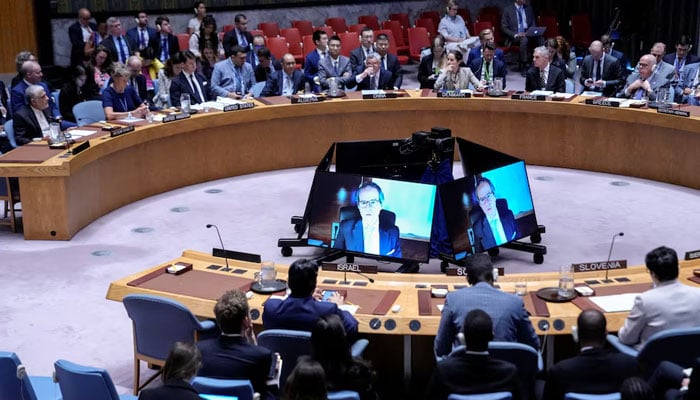
Pitt made these statements during a high-level meeting of the United Nations Security Council (UNSC), which addressed the Israeli assaults on Iran’s military facilities and nuclear sites.
This was followed by Tehran’s response, launching multiple missile strikes against Tel Aviv.
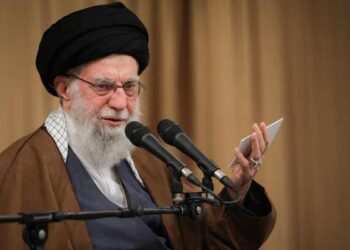
During the UNSC meeting, Iranian Ambassador Amir Saeid Iravani accused Israel of attempting to “derail diplomacy, disrupt negotiations, and entrench the region in broader conflict,” asserting that U.S. involvement was “indisputable.”
“Those backing this regime, especially the U.S., should realize that they share in this complicity,” Iravani remarked to the council. “By facilitating these actions, they shoulder full responsibility for the outcomes,” he added.
U.S. President Donald Trump announced on Friday that he had issued Tehran a 60-day deadline, which lapsed on Thursday, to negotiate a deal concerning its escalating uranium enrichment activities. A sixth round of discussions between the U.S. and Iran was set in Oman for Sunday, though its continuation remained uncertain.
Meanwhile, Israel’s UN Ambassador Danny Danon accused Iran of “preparing for war,” claiming that Tel Aviv had exercised patience in light of increasing risks.
“We waited for diplomatic efforts to succeed […]. We saw negotiations prolong as Iran made deceptive concessions or declined fundamental terms,” Danon told the UNSC. He indicated that intelligence suggested Iran could produce enough fissile material for several nuclear bombs within mere days.
In light of the escalating tensions, Pitt stated that the U.S. would persist in seeking a diplomatic resolution to ensure Iran never obtains nuclear weapons or poses a threat to Middle Eastern stability.
“Iran’s leadership should recognize the importance of negotiation at this time,” Pitt advised the council, noting that while Washington had been informed about Israel’s initial strikes, it was not militarily engaged.
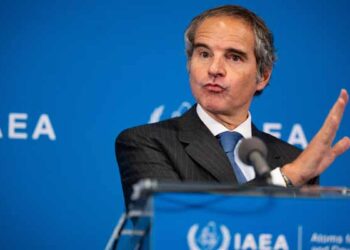
Rafael Grossi, head of the UN nuclear watchdog, informed the UNSC that the pilot enrichment facility at Iran’s Natanz nuclear site has been destroyed, and that Iran reported attacks on sites at Fordow and Isfahan as well.
 ChatGPT
 Perplexity
 Gemini AI
 Grok AI