
Select Language:
Climate Change Update from the UN
GENEVA: According to a recent United Nations report released on Wednesday, there is a 70% likelihood that global average temperatures will exceed the critical threshold of 1.5 degrees Celsius between 2025 and 2029.
This forecast indicates that the world will likely experience historically high temperatures following the two hottest years ever recorded in 2023 and 2024. The report was put together by the World Meteorological Organization (WMO), which is the UN’s weather and climate agency.
"We have just passed through the ten warmest years on record," stated Ko Barrett, the WMO’s deputy secretary-general. "Regrettably, this report shows no signs of relief in the foreseeable future, suggesting that our economies, daily lives, ecosystems, and the planet will increasingly suffer."
The Paris Agreement, established in 2015, aimed to limit global warming to significantly below 2°C compared to pre-industrial levels, with a more ambitious goal of 1.5°C if feasible. These benchmarks are determined based on the global temperature averages from 1850 to 1900, a period before widespread industrial dependence on coal, oil, and gas, which emit carbon dioxide (CO2) – the primary greenhouse gas responsible for climate change.
The goal of keeping warming within the 1.5°C limit is increasingly viewed as unattainable by a growing number of climate experts, given the ongoing rise in CO2 emissions.
Five-Year Forecast
The latest projections by the WMO, developed in collaboration with the UK’s Met Office and other global centers, estimate that the average near-surface temperature for the years 2025 to 2029 will likely fall between 1.2°C and 1.9°C above the pre-industrial average. There is a 70% probability that the average temperature during this five-year stretch will surpass the 1.5°C mark.
"This aligns perfectly with our expectations of breaching the 1.5°C threshold on a long-term basis by the late 2020s or early 2030s," commented Peter Thorne, director of the Irish Climate Analysis and Research Units at Maynooth University. He added, "In the next two to three years, I expect this probability to rise to 100%."
Additionally, the WMO forecasts an 80% chance that at least one year between 2025 and 2029 will record temperatures higher than the current warmest year on record, which is 2024.
Long-Term Predictions
To address natural climate fluctuations, the WMO employs several methodologies to evaluate long-term warming trends. One such approach considers data from the past decade alongside future projections, estimating that the 20-year average warming from 2015 to 2034 will be approximately 1.44°C. However, there is still no consensus on the best method for assessing long-term temperature changes.
The EU’s climate monitoring service Copernicus estimates current warming at around 1.39°C, with projections indicating that the temperature could reach the 1.5°C mark by mid-2029 or even sooner.
The 2°C Threshold
While currently assessed as "extremely unlikely" at just a 1% chance, there is now a measurable possibility of at least one year in the next five exceeding 2°C of warming. "This marks the first time our models have predicted such an event," noted Adam Scaife from the Met Office. He expressed alarm at the implications and warned that this probability is likely to increase.
Recalling predictions from a decade ago, he stated that forecasts initially suggested a very low chance of any year surpassing the 1.5°C benchmark, which has already occurred in 2024.
Implications of Warming
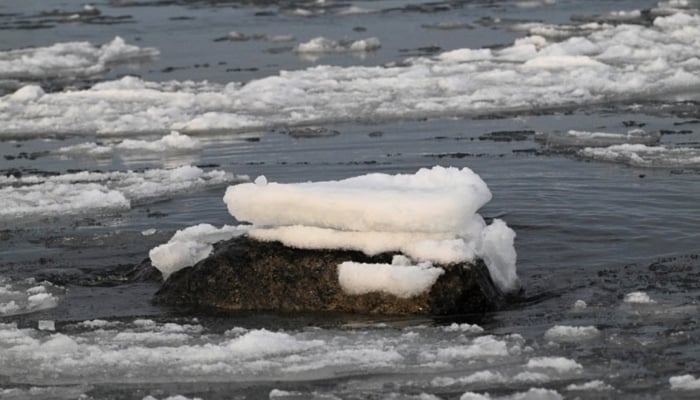
Every increment of additional warming will exacerbate phenomena such as heatwaves, heavy rainfall, droughts, and the melting of polar ice, glaciers, and sea ice. This year’s climate patterns offer no reprieve: last week, parts of China experienced temperatures above 40°C (104°F), regions in the United Arab Emirates neared 52°C (126°F), and Pakistan was struck by deadly winds stemming from an intense heatwave.
"We’ve already reached a perilous level of warming," stated climatologist Friederike Otto from Imperial College London, highlighting recent devastating floods in multiple countries and wildfires in Canada. "Continuing to rely on fossil fuels in 2025 is sheer madness."
Additional Concerns
The WMO also anticipates that Arctic regions will continue to warm at a rate faster than the global average over the next five years. Predictions for sea ice in March from 2025 to 2029 suggest continued decreases in the Barents Sea, Bering Sea, and Sea of Okhotsk. Furthermore, projections indicate that South Asia will see above-average rainfall over the coming five years, while regions like the Sahel, northern Europe, Alaska, and northern Siberia will experience wetter conditions, and the Amazon is expected to be drier than usual.
 ChatGPT
 Perplexity
 Gemini AI
 Grok AI