Select Language:
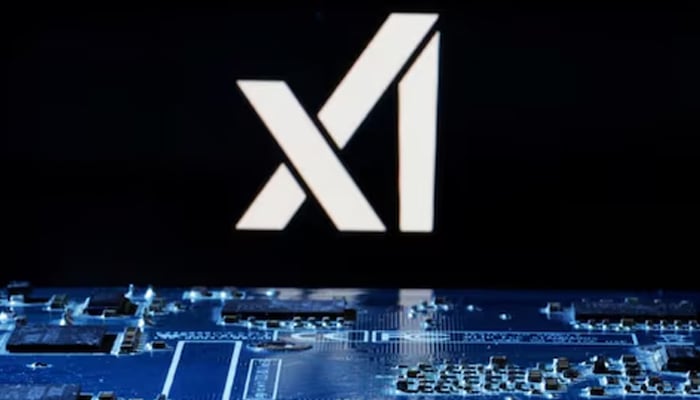
Elon Musk’s xAI has purchased X, a deal that values the social media platform at $33 billion and allows the financial success of his AI firm to be reflected in the investments shared with his partners in the company previously known as Twitter.
This acquisition could enhance xAI’s capabilities to train its chatbot, known as Grok.
Musk, who also leads Tesla and SpaceX, posted on X, stating, “The futures of xAI and X are merged. Today, we officially take the step to combine our data, models, computing power, distribution, and talent.”
He mentioned that this collaboration gives “xAI a value of $80 billion and X a value of $33 billion ($45 billion less $12 billion in debt).”
Representatives from X and xAI were not immediately available for comment, and many details of the agreement are still unclear, such as how the leadership of X will fit into the new entity and whether there will be regulatory scrutiny involved.
Musk, the richest person in the world, is also known for his close ties to former US President Donald Trump and oversees the Department of Government Efficiency.
Saudi investor Prince Alwaleed bin Talal of Kingdom Holding stated that he had requested the deal. He pointed out that his companies are the second largest investors in both X and xAI. “Following this transaction, our investments are expected to reach a value of $4-$5 billion… and the clock is ticking,” he shared on X.
According to D.A. Davidson analyst Gil Luria, the $45 billion price tag for X, including its debt, wasn’t coincidental: “It is $1 billion more than the total for the take-private transaction for Twitter in 2022.”
An unidentified xAI investor expressed that they foresaw this agreement as Musk consolidating his control and management across his companies.
Musk did not seek approval from investors but informed them that the two entities had been working closely together, and the merger would lead to a deeper integration with Grok, the investor noted.
Competition with OpenAI
Musk’s xAI, established just under two years ago, recently secured $10 billion in a funding round that set its valuation at $75 billion, according to reports.
It competes against Microsoft-backed OpenAI and the Chinese startup DeepSeek.
In February, Musk attempted a $97.4 billion bid with a group for OpenAI, which was rejected. He has also initiated legal action to stop the company from transitioning from a non-profit to a for-profit structure. A judge recently denied Musk’s request for a temporary injunction to halt the transition.
As competition in the AI sector intensifies, xAI has been expanding its data center capabilities to train more sophisticated models. Its supercomputer cluster in Memphis, Tennessee, dubbed “Colossus,” is hailed as the largest worldwide.
xAI unveiled Grok-3, the latest upgrade of its chatbot, in February.
The X platform could further facilitate the distribution of xAI products, while also offering a live feed of user interactions, screenshots, and additional data.
Following the acquisition of Twitter, Musk significantly reduced the company’s workforce, leading to a rapid loss of advertisers and revenue. Recently, brands have been returning to X as Musk’s influence in the Trump administration increases.
The seven banks that provided Musk with $13 billion in loans to complete the purchase of X retained the debt on their books for two years before selling it all at once last month, as indicated by a source familiar with the transactions.
This move was facilitated by a spike in investor interest in AI companies and improvements in X’s operating performance over the last two quarters, among other factors, sources have reported.
Following the merger, investors who acquired the debt from the banks are expected to profit, according to Espen Robak, founder of Pluris Valuation Advisors, which specializes in illiquid assets. “The debt is certainly worth more now, if not fully repaid.”
In another matter, a US judge on Friday dismissed a request from Musk to throw out a lawsuit alleging he had deceived former Twitter shareholders by delaying the disclosure of his initial investment in the company.
 ChatGPT
 Perplexity
 Gemini AI
 Grok AI