Select Language:
ANDONG, SOUTH KOREA – On Thursday, wildfires in South Korea surged in size, now recognized as the nation’s most catastrophic wildfire disaster. Reports confirm at least 28 fatalities and the destruction of historic temples.
The affected area encompasses over 38,000 hectares (approximately 93,900 acres), originating from a fire in Uiseong County. This marks the largest forest fire in the country’s recorded history, surpassing a previous incident in March 2000 that burned 24,000 hectares (around 59,000 acres).
“We are facing a national emergency, with significant casualties due to the unprecedented speed at which these wildfires are spreading,” stated Acting President Han Duck-soo during a government briefing.
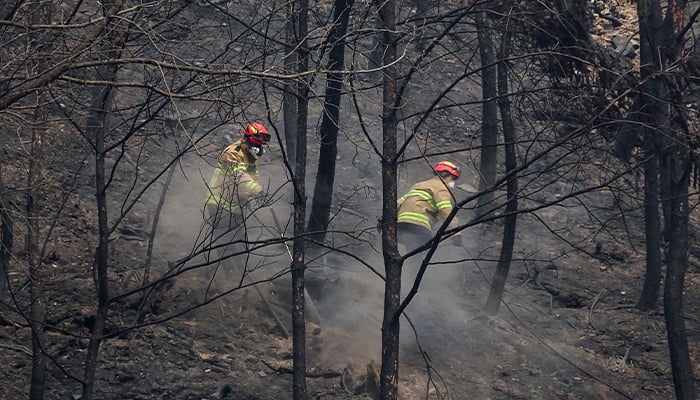
In response, the military has deployed aviation fuel reserves to ensure fire-fighting helicopters can continue combatting the flames in the mountainous southeast regions, where the fires have persisted for nearly a week.
To combat the blazes, over 120 helicopters have been dispatched to three different areas, according to the safety ministry. Given the country’s hilly terrain, helicopters are vital in firefighting efforts. Tragically, one pilot lost his life on Wednesday when his helicopter crashed while attempting to extinguish the flames.
The Uiseong-originating wildfires have quickly advanced eastward, almost reaching the coast, propelled by strong winds and dry conditions that worsen the situation.
The situation escalated sharply on Wednesday, with the fire extending to the coastal county of Yeongdeok, approximately 50 km (30 miles) away, within just 12 hours, as noted by Won Myung-soo, who directs satellite imagery analysis for the national forestry service.
On Thursday evening, light rain fell in parts of the affected areas. While the one millimeter of precipitation was insufficient to extinguish the primary fire, officials believe it might assist in containing it. A similar amount of rain is anticipated for Friday.
Experts noted that the rapid spread of the Uiseong fire is unprecedented in terms of scale and velocity, and they anticipate climate change will lead to more frequent and deadly wildfires worldwide.
Escalating temperatures, exacerbated by human-induced climate change, have intensified the dry conditions, effectively turning previously arid landscapes into highly flammable areas, according to a report by Climate Central, a group of scientists and researchers.
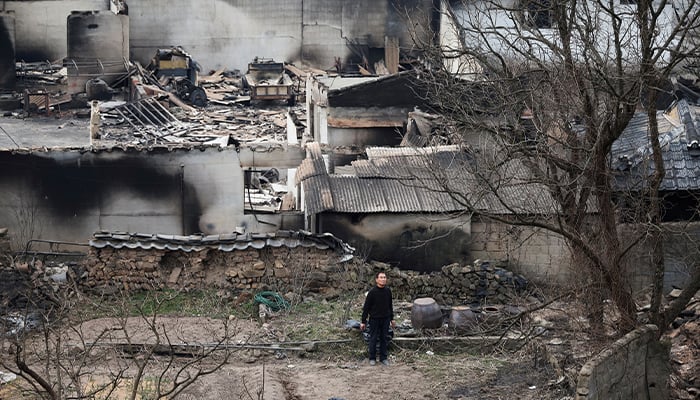
The wildfires have devastated an area comparable to half the size of Singapore, destroying everything in their path, including historic temples and residences in the mountainous forests of North Gyeongsang province.
Firefighting teams are on the alert to protect the UNESCO World Heritage sites of Hahoe Village and the Byeongsan Confucian Academy in Andong, should a fire cross the stream surrounding them.

This picturesque folk village features traditional Korean houses, many characterized by thatched roofs, and the Confucian academy boasts a heritage of over 450 years.
The fires have already inflicted substantial damage on other historical landmarks, including a significant portion of Gounsa Temple, constructed in 681.
“The buildings and artifacts left by Buddhist monks for over 1,300 years have all vanished,” lamented Deungwoon, the head of Gounsa Temple.
 ChatGPT
 Perplexity
 Gemini AI
 Grok AI