
• About Us
  • Contact Us
  • Advertise
  • Privacy Policy
  • Guest Post
No Result
View All Result
Digital Phablet
  • Home
  • NewsLatest
  • Technology
    • Education Tech
    • Home Tech
    • Office Tech
    • Fintech
    • Digital Marketing
  • Social Media
  • Gaming
  • Smartphones
  • AI
  • Reviews
  • Interesting
  • How To
  • Home
  • NewsLatest
  • Technology
    • Education Tech
    • Home Tech
    • Office Tech
    • Fintech
    • Digital Marketing
  • Social Media
  • Gaming
  • Smartphones
  • AI
  • Reviews
  • Interesting
  • How To
No Result
View All Result
Digital Phablet
No Result
View All Result

Home » The Mystery Behind the Red Moon Explained

The Mystery Behind the Red Moon Explained

Maisah Bustami by Maisah Bustami
March 14, 2025
in News
Reading Time: 2 mins read
A A
The Mystery Behind the Red Moon Explained.jpg
ADVERTISEMENT

Select Language:

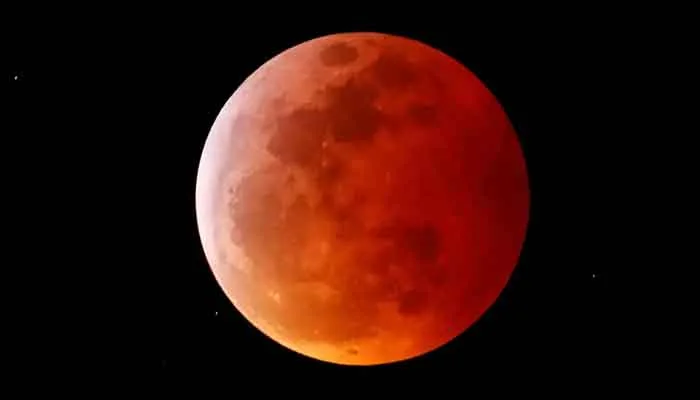
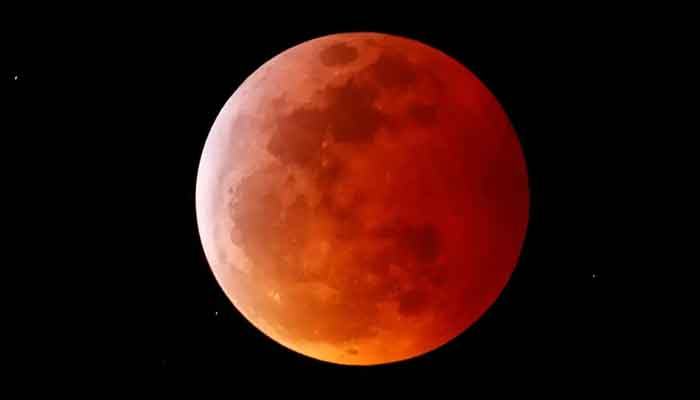
A depiction of a blood-red Moon.
A depiction of a blood-red Moon. — Reuters/File

A Total Lunar Eclipse is happening right now, an astronomical phenomenon that started yesterday evening and will persist into today.

ADVERTISEMENT

The Moon is illuminated in a striking, coppery-red color, visible from locations across the Western Hemisphere, as reported by Al Jazeera.

It’s important to understand that a lunar eclipse occurs when the Earth is positioned directly between the Sun and the Moon. This alignment blocks sunlight and casts the Earth’s shadow onto the Moon’s surface.

What Causes the Moon to Appear Red During an Eclipse?

During a Total Lunar Eclipse, the Moon takes on a red or orange hue.

ADVERTISEMENT

This occurs because the only sunlight that reaches the Moon must first pass through the Earth’s atmosphere.

As it travels through, the sunlight interacts with dust particles, water droplets, and atmospheric gases.

A phenomenon known as Rayleigh scattering is also significant here.

This process means that colors of light with longer wavelengths, like red, scatter less and can travel through the atmosphere to reach the Moon, while colors with shorter wavelengths scatter more and do not reach the Moon.

As anyone who has observed a rainbow or played with a prism knows, sunlight comprises a spectrum of colors, from violet (the shortest wavelength) to red (the longest wavelength).

This scattering effect results in the red light that reaches the Moon being reflected off its surface.

ADVERTISEMENT

While Total Lunar Eclipses are not everyday occurrences, they do not happen too infrequently either, with several occurring each decade.

ChatGPT ChatGPT Perplexity AI Perplexity Gemini AI Logo Gemini AI Grok AI Logo Grok AI
Google Banner
ADVERTISEMENT
Maisah Bustami

Maisah Bustami

Maisah is a writer at Digital Phablet, covering the latest developments in the tech industry. With a bachelor's degree in Journalism from Indonesia, Maisah aims to keep readers informed and engaged through her writing.

Related Posts

Google Maintains Search & Spam Policies Despite AI Search Changes
Digital Marketing

Google Maintains Search & Spam Policies Despite AI Search Changes

February 3, 2026
CB80D273FED778C4C963225658801089AA6513D2 size346 w591 h392.png
AI

OpenAI Dismisses Nvidia Chips, Altman Urgently Clarifies: Wants Big Client Deal

February 3, 2026
Infotainment

Top Countries for Investment Citizenship in 2023 North Macedonia Still Open

February 3, 2026
How to Deploy Workflow on GitHub: A Step-by-Step Guide
How To

How to Deploy Workflow on GitHub: A Step-by-Step Guide

February 3, 2026
Next Post

Unlock Every Reward in the Clover Craze Event for Black Ops 6

  • About Us
  • Contact Us
  • Advertise
  • Privacy Policy
  • Guest Post

© 2026 Digital Phablet

No Result
View All Result
  • Home
  • News
  • Technology
    • Education Tech
    • Home Tech
    • Office Tech
    • Fintech
    • Digital Marketing
  • Social Media
  • Gaming
  • Smartphones

© 2026 Digital Phablet