Select Language:
7 Types of Poop and What They Reveal About Your Health in 2025
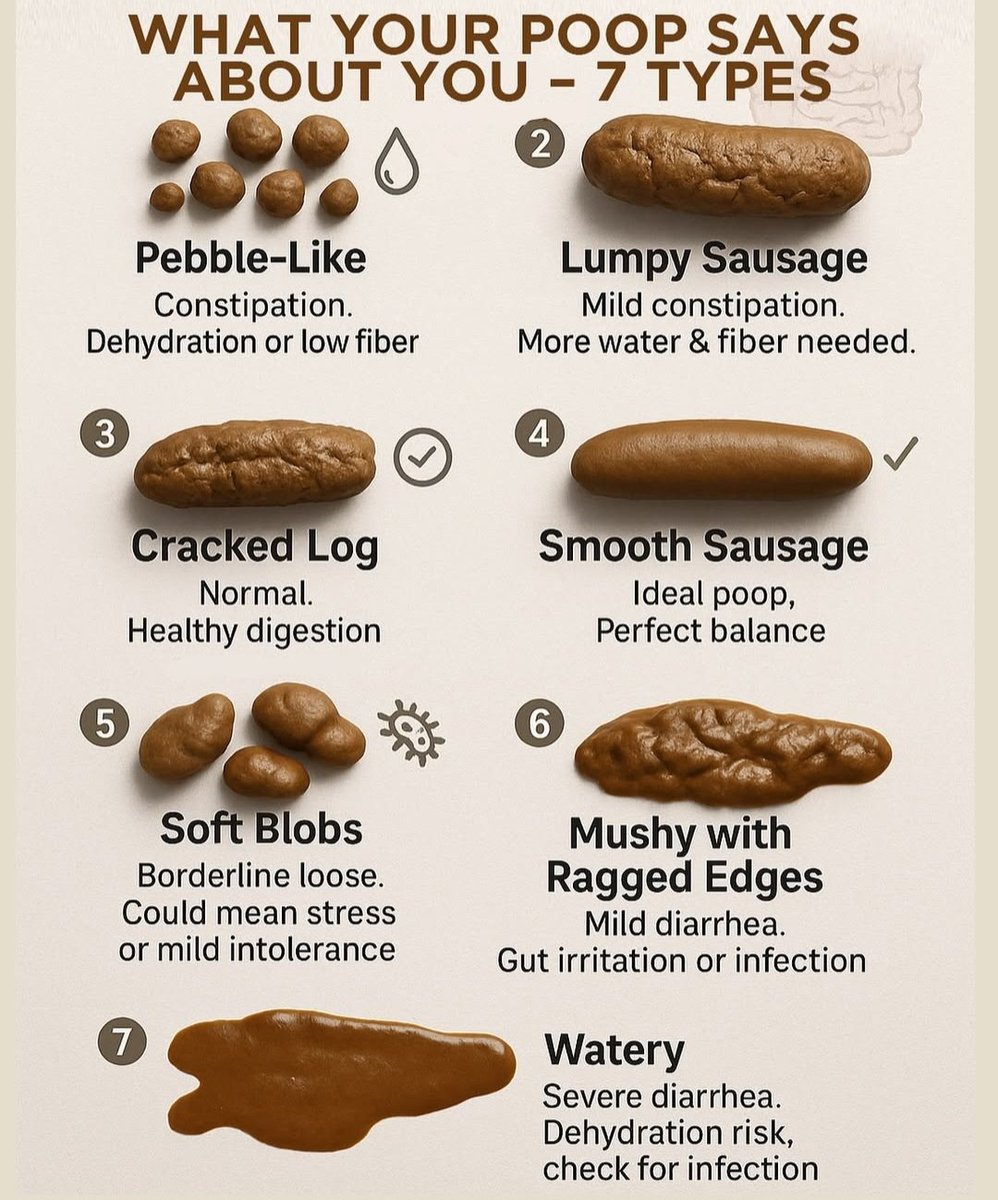
Your stool offers valuable insights into your overall health, functioning as a natural health indicator. Understanding what different types of poop mean can help you identify potential issues early on. Here’s a detailed guide to the seven common poop types and what they might say about your health:
Pebble-Like Stools: Signs of Constipation and Dehydration
If your stool looks like small, hard pebbles, it may be a signal that you’re experiencing constipation. These tiny, compact pieces typically indicate that waste has been sitting in your colon for too long, hardening as it dehydrates.
What it suggests:
- Dehydration: Not drinking enough fluids can dry out your stool, making it difficult to pass.
- Low fiber intake: Insufficient fiber can slow down bowel movements, leading to hard, pebble-like stools.
Tips for improvement: Drink plenty of water throughout the day, and incorporate more fiber-rich foods such as fruits, vegetables, and whole grains into your diet.
Lumpy Sausages: Mild Constipation Needs Attention
Having a stool that resembles a lumpy sausage suggests mild constipation. The stool is firm and uneven, indicating that your digestive system is working but not optimally.
What it indicates:
- A need for more water and dietary fiber to promote smoother bowel movements.
Advice:
- Increase your water intake.
- Add more high-fiber foods like beans, oats, and leafy greens.
- Consider gentle physical activity to stimulate digestion.
Cracked Log: Healthy and Well-Formed
A stool that looks like a cracked log is an excellent sign of healthy digestion. It indicates your stool is well-formed, soft enough to pass easily, and not overly dry.
What it means:
- Your digestive system is functioning efficiently.
- No significant issues are present.
Maintain: Keep up your balanced diet and hydration habits to sustain this healthy status.
Smooth Sausage: The Gold Standard
The smooth, sausage-shaped stool is considered the ideal stool type—a sign of optimal digestive health.
What it signifies:
- Proper hydration
- Adequate fiber intake
- Good gut function
Tips to stay on track: Continue your balanced lifestyle, including adequate water, fiber, and regular exercise.
Soft Blobs: Borderline Loose Stool
If your stool consists of soft blobs, it is borderline loose and may be a sign that your gut is slightly irritated or you’re experiencing food intolerance.
Possible causes:
- Mild digestive disturbances
- Stress or anxiety
- Food sensitivities
Suggestions:
- Monitor your diet for potential triggers.
- Practice stress-reducing activities.
- Consult your healthcare provider if this persists.
Mushy with Ragged Edges: Mild Diarrhea Warning
Mushy, ragged-edged stool points to mild diarrhea, which could be caused by gut irritation or early signs of infection.
What it means:
- Your gut lining might be inflamed.
- Possible infections, food poisoning, or temporary dietary issues.
What to do:
- Stay hydrated.
- Keep track of any other symptoms like fever or cramps.
- Seek medical attention if the condition persists or worsens.
Watery Stool: Severe Diarrhea and Dehydration Risk
Watery stool is the most concerning type, indicating severe diarrhea. This condition can quickly lead to dehydration and electrolyte imbalances.
Key concerns:
- Possible infection, such as norovirus or bacterial pathogens.
- Significant volume loss of fluids.
Immediate actions:
- Hydrate aggressively with oral rehydration solutions.
- Seek urgent medical care, especially if accompanied by fever, severe cramps, or ongoing dehydration symptoms.
Regularly monitoring your stool type can help you catch potential health problems early. Remember, persistent changes in your bowel habits should always prompt a visit to your healthcare provider to determine underlying causes and appropriate treatment.
Stay informed, stay healthy!
 ChatGPT
 Perplexity
 Gemini AI
 Grok AI