Select Language:
Declining Fertility Rates in Western Countries: What’s Behind the Drop?
1. Birth Rates Drop to Historic Lows
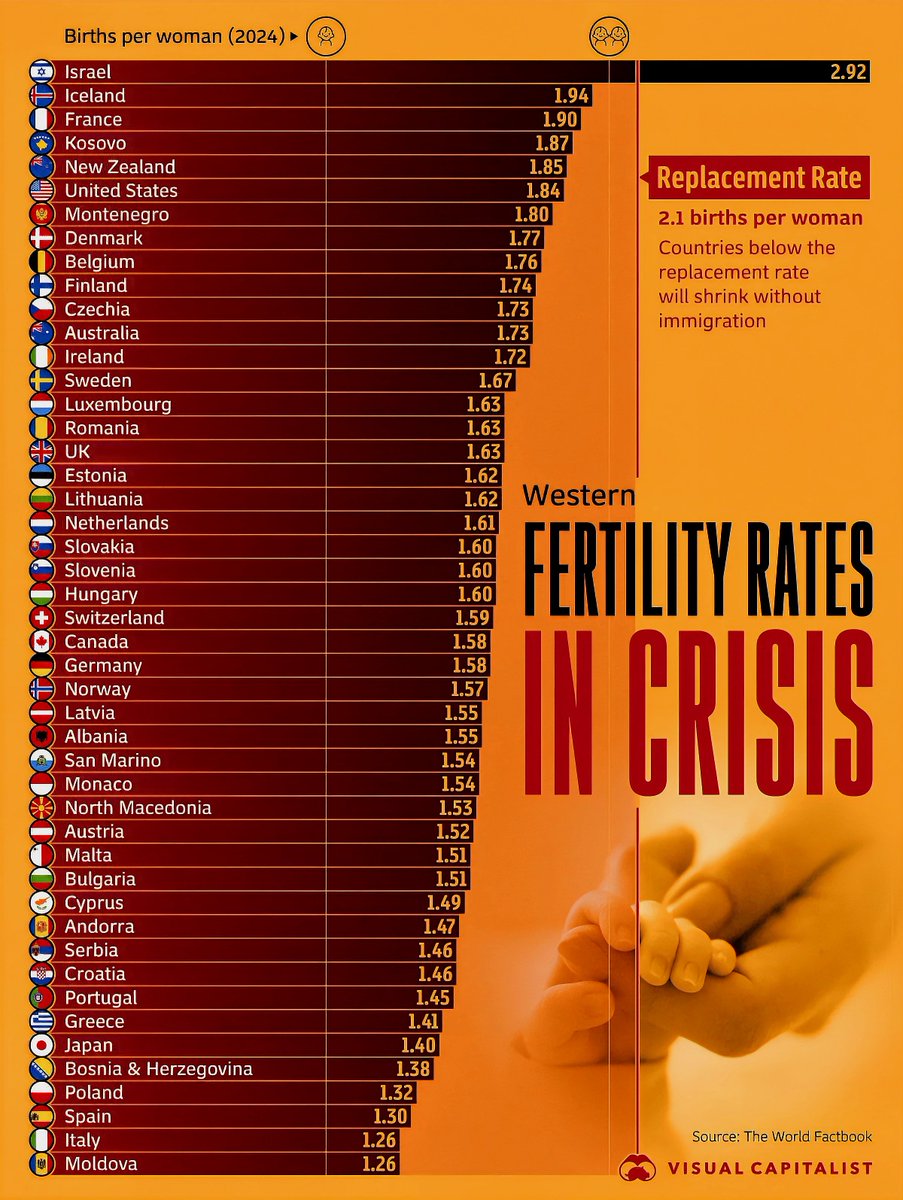
In 2025, Western nations are experiencing their lowest birth rates in decades. Countries like the United States, Canada, the UK, and many parts of Western Europe are seeing fewer babies born each year. For instance, the U.S. has recorded a birth rate of just 1.65 children per woman, well below the replacement level of 2.1. This decline continues to alarm policymakers, educators, and economists who rely on stable population growth for future economic stability.
2. Economic Uncertainty and Cost of Living as Major Factors
Rising costs of living and economic instability are increasingly influencing family planning decisions. High housing prices, student loan debts, and rising healthcare costs are discouraging many potential parents from expanding their families. For example, in major cities like New York and London, the financial burden associated with raising children has become a significant deterrent. This economic pressure is leading many to postpone childbearing or forgo children altogether.
3. Changing Social Attitudes Toward Parenthood
Societal norms around marriage and parenthood are shifting significantly. More young adults are prioritizing personal development, travel, and career over traditional family structures. Additionally, attitudes toward marriage have evolved, with many choosing to remain single or delay marriage past their 30s or 40s. These shifts are contributing to the decreasing fertility rates, as fewer individuals feel motivated or able to have children under their current social norms.
4. Impact of Advancements in Contraception and Family Planning
Greater access to contraception and reproductive health services has empowered individuals to control their reproductive choices better. While this is a positive development for women’s rights and health, it has also led to a decline in unintended pregnancies and, consequently, a reduction in fertility rates. Moreover, some experts suggest that the widespread availability of contraception allows young adults to postpone childbirth indefinitely, contributing to the overall drop in birth rates.
5. Decline in Marriage Rates and Its Effects
Marriage has traditionally been linked to higher fertility rates, but the trend of declining marriage rates continues. Increasing numbers of people are choosing to remain single or in cohabiting relationships without formal marriage. This trend correlates with reduced fertility, as unmarried couples tend to have fewer children or remain childless. In many Western countries, the average age of first marriage is rising, often beyond 30 years old, which further contributes to declining birth numbers.
6. Gender Roles and Workforce Participation
More women are participating in higher education and the workforce than ever before. While this progress is positive, it often coincides with delaying parenthood. Balancing career ambitions with family life has become more challenging, leading many women to postpone having children. The lack of affordable, quality childcare and family support services further discourages early parenthood, affecting overall birth rates.
7. Declining Immigration and Population Stabilization Efforts
Some Western countries are seeing stagnation or decline in immigration, which historically offset low birth rates. Without sufficient influxes of younger populations, these nations face aging demographics and shrinking workforce numbers. Governments are attempting to implement policies to attract more immigrants, but uptake has been slow or politically contentious, complicating efforts to stabilize populations.
8. Future Demographic Challenges
The long-term outlook indicates continued population decline if current trends persist. Aging populations will place additional pressure on healthcare and pension systems, while shrinking workforces threaten economic growth. Countries such as Italy, Japan, and Germany are already experiencing these issues acutely, and similar challenges are anticipated across Western nations in the coming decades.
9. Policy Measures and Potential Solutions
In response to these trends, governments are experimenting with policies aimed at boosting fertility. These include financial incentives for families, subsidized childcare, parental leave enhancements, and tax benefits for parents. However, the effectiveness of these measures remains mixed, and some experts argue that cultural shifts and socioeconomic factors require more comprehensive approaches.
10. What Can Be Done?
Addressing declining fertility in the West demands a multidimensional strategy. Policymakers might prioritize flexible work arrangements, affordable housing, and improved childcare support to make parenthood more feasible. Public awareness campaigns emphasizing the value of family life, alongside efforts to reduce economic barriers, could also help reverse the downward trend in birth rates. As 2025 unfolds, nations grappling with these demographic shifts must innovate to foster sustainable growth and secure future generations.
In summary, the declining fertility rates across Western nations reflect a complex interplay of economic, social, and cultural factors. Recognizing these issues early and implementing comprehensive solutions will be crucial in shaping resilient societies for decades to come.
 ChatGPT
 Perplexity
 Gemini AI
 Grok AI