Select Language:
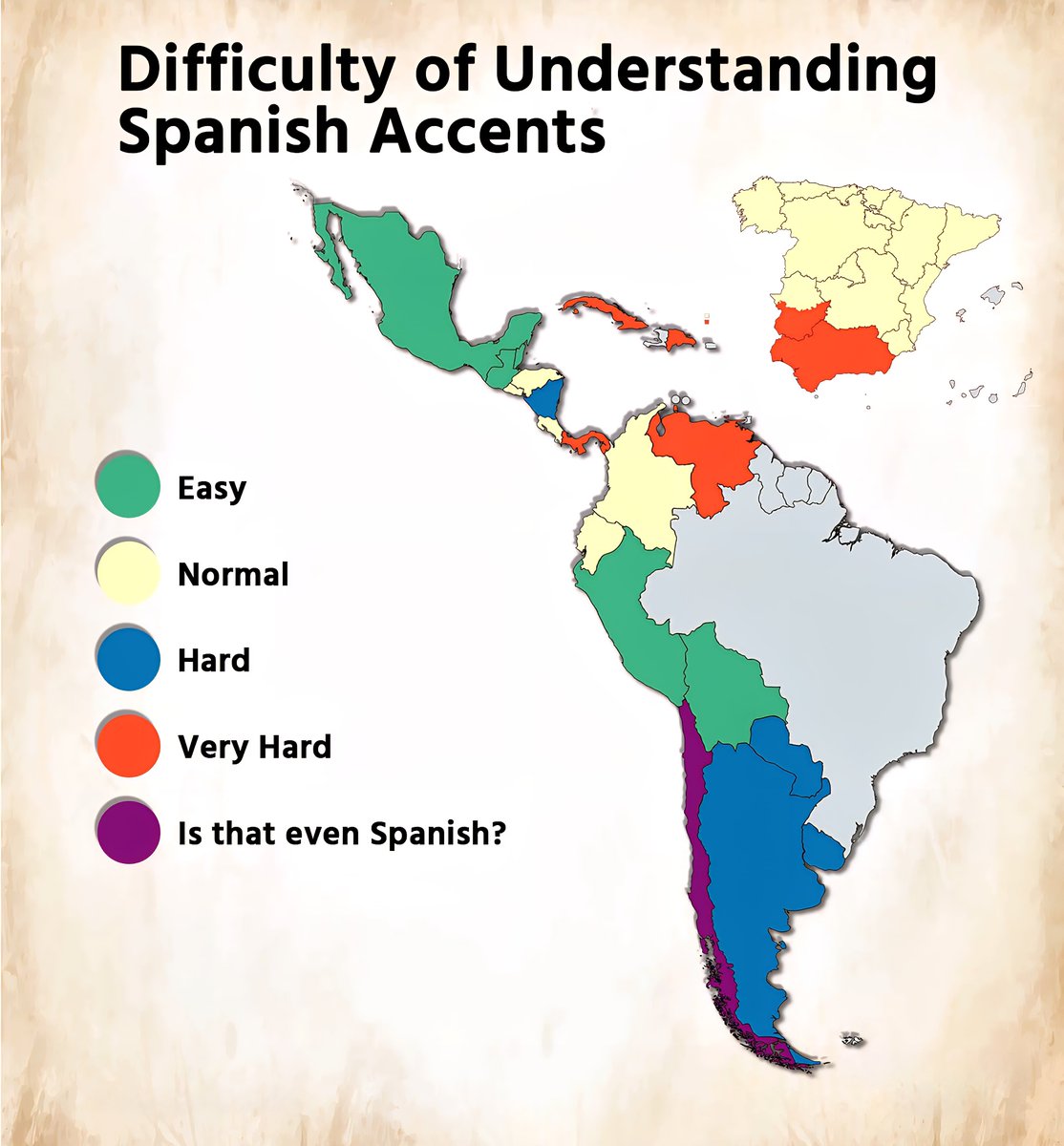
The 2025 Guide to Spanish Accents: How Challenging Are They to Understand?
- Easiest Accents to Comprehend: Mexican and Central American Spanish
When diving into Spanish, many find Mexican and Central American accents to be the most accessible for understanding. These regions typically feature clear enunciation, slower speech patterns, and fewer slang variations, making them ideal for beginners. Language learners and media producers often prioritize these accents due to their clarity and ease of comprehension. For instance, popular Spanish movies, TV shows, and learning resources frequently use Mexican Spanish to reach a broad audience with minimal confusion.
- Moderately Difficult: Standard Castilian and Northern Spanish Variants
Moving toward Spain, accents from regions like Madrid and northern Spain tend to be moderately challenging. While still recognizable as Spanish, some nuances—such as the “liísmo” pronunciation (pronouncing ‘l’ in place of ‘r’ sounds in certain words) or slight variations in intonation—may take time to adapt to. However, with consistent exposure, understanding improves noticeably, and many learners find these accents manageable with focused practice.
- Challenging for Most: Caribbean and Southern Spanish Dialects
Accents from the Caribbean, including Puerto Rican, Dominican, and Cuban Spanish, tend to be more difficult. These areas are known for rapid speech, dropping of syllables, and distinct pronunciation of consonants—particularly the dropping of the ‘s’ at the end of words—making comprehension trickier. Similarly, southern regions of Spain, such as Andalusia, feature a fast-paced, relaxed speech that incorporates local slang and unique phonetic shifts, which can confuse even seasoned learners.
- Very Difficult Accents: Certain Latin American & Spanish Regional Slang
Some regional accents go beyond typical challenges to become almost unintelligible to outsiders. For example, specific accents in the Caribbean and parts of South America include heavily slang-laden speech, rapidly dropping sounds, or unique intonations. These dialects often incorporate indigenous influences, making understanding akin to deciphering a language stew—rich, layered, and requiring extensive immersion to master.
- The “Is That Even Spanish?” Category: When Dialects Diverge Sharply
In rare cases, some accents or local speech patterns are so distinct they seem like entirely different languages. This includes certain indigenous-influenced dialects, dialects heavily infused with local slang, or speech riddled with colloquialisms that do not translate well to standard Spanish. While these are genuine forms of Spanish, they may pose significant comprehension challenges for outsiders, especially without prolonged exposure or cultural immersion.
- Subjectivity in Understanding Accents
It’s crucial to remember that difficulty levels are subjective. A learner’s familiarity with regional accents depends largely on their exposure, practice, and context. Someone who spends time in Mexico might find Caribbean accents challenging, whereas a traveler familiar with Spain might struggle with Caribbean slang. The key is consistent listening practice across diverse accents to build a more flexible understanding.
Understanding the diverse tapestry of Spanish accents can significantly enhance communication skills and cultural appreciation. Whether you’re just starting out or trying to refine your listening skills in 2025, recognizing these regional differences is vital for effective multilingual engagement. To truly master the language, embrace exposure to various accents—each one offers a new window into the rich cultural landscapes of the Spanish-speaking world.
 ChatGPT
 Perplexity
 Gemini AI
 Grok AI