Select Language:
China’s Dominance in the Global Critical Minerals Market
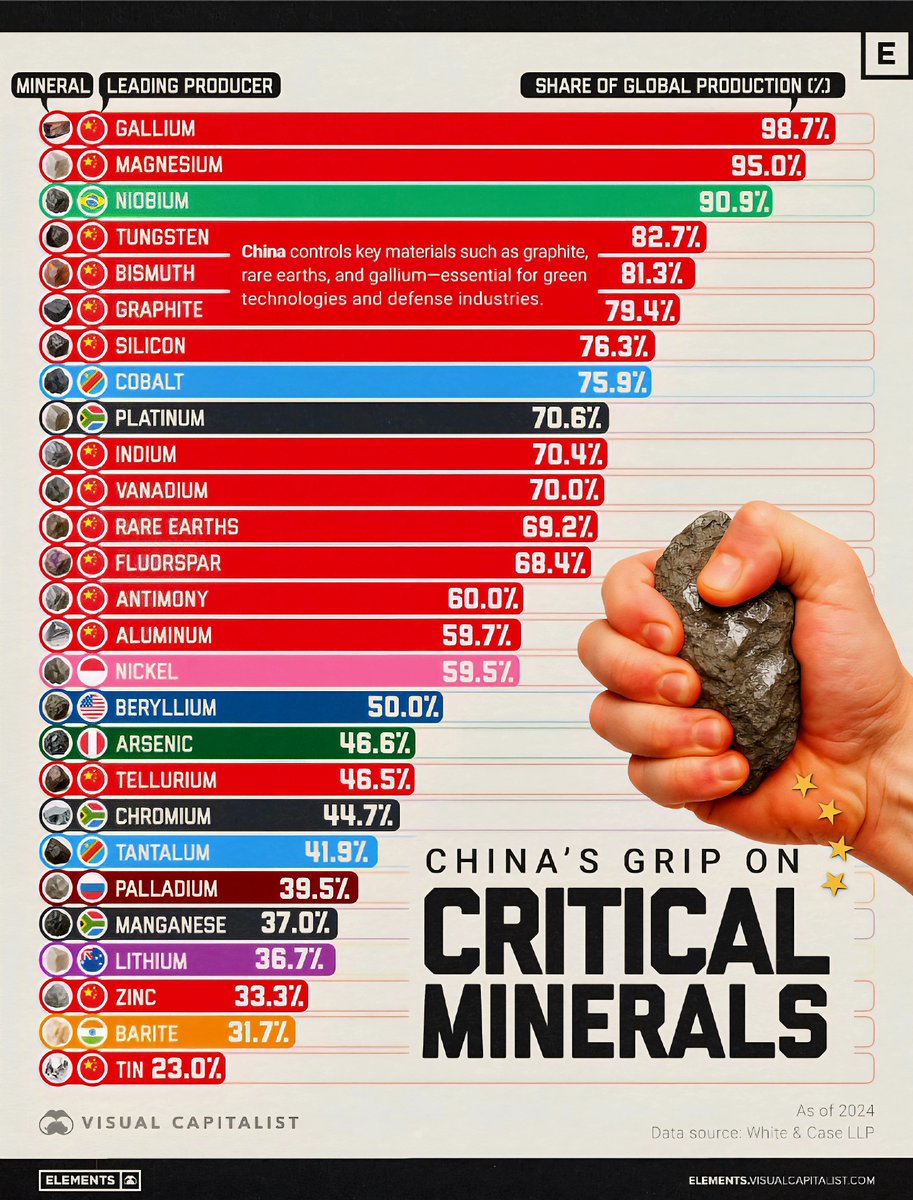
1. China’s Leading Role in Mineral Production and Processing
China continues to hold a significant share in the global extraction and processing of critical minerals, such as rare earth elements, lithium, cobalt, and tungsten. According to recent reports, over 60% of the world’s rare earth element production occurs within China’s borders, with a large portion of the processing facilities also situated domestically. This extensive control allows China to influence the availability and pricing of these vital materials, which are essential for manufacturing everything from smartphones to electric vehicle batteries.
2. Strategic Stockpiling and Reserves
The Chinese government has strategically amassed large reserves of critical minerals to secure its supply chain. These stockpiles serve as a buffer during international trade tensions or disruptions, providing China with leverage over its trading partners. Experts estimate that China holds nearly 50% of the world’s refined rare earth supplies, giving it considerable power in industries worldwide that depend on these materials.
3. Investment and Expansion in Mining Operations Worldwide
Beyond its borders, China has heavily invested in mining operations across Africa, South America, and Southeast Asia. Chinese state-backed companies have acquired or established mining projects in countries rich in critical minerals, such as the Democratic Republic of Congo for cobalt and Bolivia for lithium. These investments help China diversify its sources but also extend its influence in these regions, raising concerns about resource sovereignty and geopolitical leverage.
4. Control Over Supply Chains and Downstream Processing
While China’s control over raw extraction is substantial, its dominance also extends to downstream processing. The country operates most of the global processing plants that turn raw minerals into usable materials for industries like electronics and clean energy. This vertical integration effectively makes China a gatekeeper for critical mineral supply chains, with potential bottlenecks that could impact global manufacturing.
5. Impact on Global Markets and Prices
China’s grip on critical minerals translates into considerable influence over global markets. Fluctuations in Chinese policies or export restrictions can cause sharp price variations, affecting supply chains worldwide. For instance, trade disputes or environmental crackdowns within China sometimes lead to temporary shortages and price hikes, which ripple through industries dependent on these materials.
6. The U.S. and Allies’ Response to Chinese Dominance
In response, the United States, Australia, the European Union, and other allies are ramping up efforts to reduce dependence on China. This includes investing in domestic mining projects, developing recycling technologies, and diversifying supply sources. The Biden administration prioritized establishing a resilient supply chain for critical minerals, aiming to diminish China’s influence and safeguard national security.
7. Environmental and Ethical Concerns Surrounding Mining Practices
China’s control over critical minerals is not without controversy. Critics highlight environmental degradation, human rights abuses, and questionable labor practices associated with some Chinese mining operations. These concerns have prompted calls for more sustainable and ethical sourcing standards worldwide, encouraging investment in greener mining technologies and transparent supply chains.
8. Technological Innovation and Alternative Materials
As part of its strategic approach, China also invests in research for creating alternative materials and improving recycling methods. The goal is to reduce reliance on imports and foster technological self-sufficiency. For example, advancements in battery recycling are poised to offset some of the pressure exerted by China’s dominant position in raw material supply.
9. The Future of Critical Mineral Control
Looking forward, China’s influence in critical minerals is expected to persist unless major shifts occur in global policy or technological innovation. Countries worldwide are increasingly aware of the fragility of their supply chains and are actively seeking solutions, such as building strategic reserves and investing in domestic extraction technologies.
10. Navigating the Global Challenge
Navigating the complex landscape of resource control will require international cooperation, sustainable mining practices, and investments in new technologies. As the demand for critical minerals surges with the rise of electric vehicles, renewable energy, and advanced electronics, understanding China’s role remains crucial in shaping future policies and ensuring supply chain resilience.
Note: The insights above are based on current estimations and ongoing developments in 2025, reflecting the evolving dynamics of global resource control.
 ChatGPT
 Perplexity
 Gemini AI
 Grok AI