
Select Language:
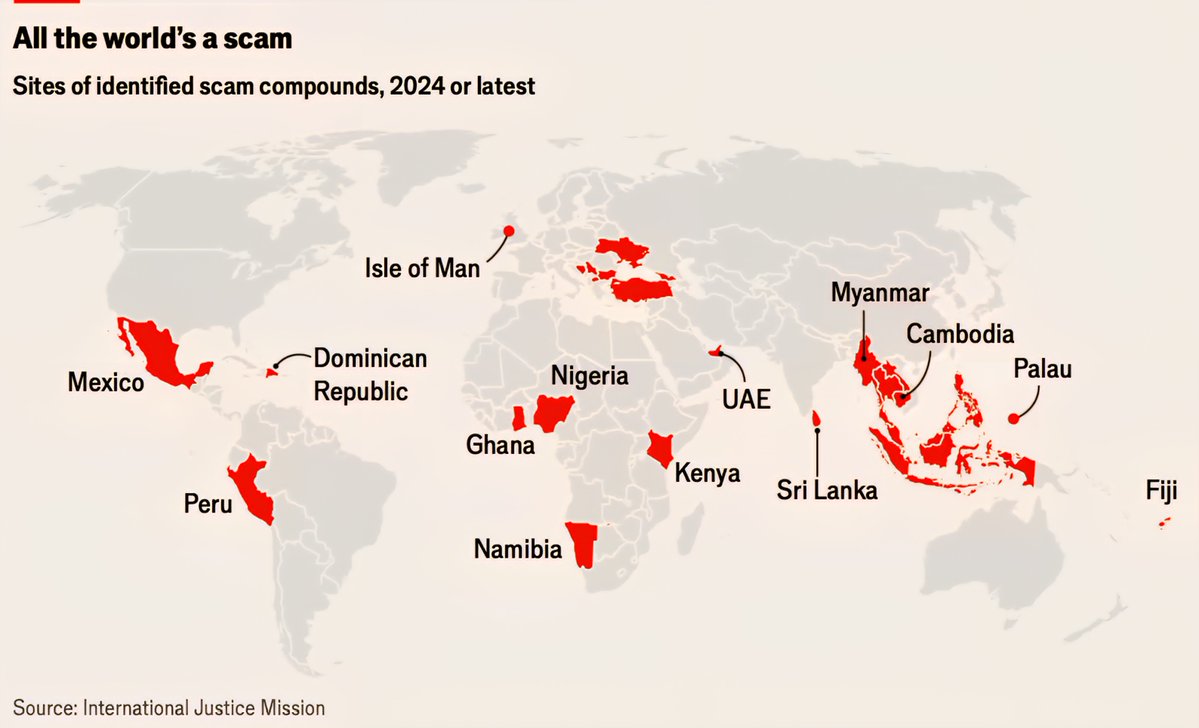
Top Global Scam Hotspots in 2025: Where Fraudulent Operations Are Flourishing
1. Mexico: A Hub for Digital Con Artists
Mexico continues to be a significant hotspot for online scams, with criminal groups setting up sophisticated operations along its borders and major cities. These schemes often involve romance scams, fake job offers, and financial fraud targeted at both domestic and international victims. Authorities are increasingly cracking down, but the scale and complexity of these operations make eradication challenging.
2. Dominican Republic: Growing Incidents of Online Fraud
The Dominican Republic has gained notoriety for hosting scam compounds that trap victims, sometimes involving forced labor to run complex online schemes. Criminal gangs lure individuals with false promises of employment, only to confine them in heavily guarded facilities where they are compelled into scams such as phishing, fake investment schemes, and scam phone calls worldwide.
3. Peru: From Tourist Destination to Privacy Breach Hotspot
Peru, while popular among tourists, has seen a surge in digital scam activity. Localities within the country serve as hideouts for trafficked victims forced to execute scams, including stealing personal information, creating fake websites, and perpetrating scams targeting vulnerable populations across North America and Europe.
4. Isle of Man: An Unexpected Player in Cyber Crime
Though primarily a financial haven, the Isle of Man’s reputation is tarnished by reports of scam operations exploiting its financial infrastructure. Criminal networks leverage the island’s banking facilities to facilitate and conceal fraudulent activities, including crypto scams and online extortion campaigns affecting millions of victims worldwide.
5. Ghana: A Growing Center for Online Financial Frauds
Ghana has become a significant player in online scams, with trafficked victims coerced into scam farms that target global audiences. These operations often involve romance scams, fraudulent trading, and fake tech support services, causing millions in losses annually across the globe.
6. Nigeria: The Epicenter of Digital Scam Innovation
Known for its vibrant tech community, Nigeria is also infamous for its cybercrime industry. Large, organized scam compounds operate under strict guard, forcing trafficked victims to carry out scams such as advance-fee frauds, romance scams, and fake cryptocurrency investment schemes that drain billions from unsuspecting victims worldwide.
7. Kenya: A Rising Threat in Cyber Exploits
Kenya is emerging as a key hub for scam operations, with trafficked individuals forced into running scam call centers and fake e-commerce sites. The victims are often exploited through threats and violence, with the networks targeting international victims with sophisticated social engineering tactics.
8. Namibia: Hidden but Growing Scam Networks
While Namibia’s reputation remains largely intact, recent investigations reveal the rise of scam facilities in remote areas. Victims are forced into long working hours executing online fraud tasks, including email scams and fake product frauds, causing widespread financial harm globally.
9. United Arab Emirates: Rich Veil Masks Scamming Activities
Famous for its wealth and luxury lifestyle, the UAE is also becoming a hotspot for scam operations. Criminal groups leverage the country’s financial infrastructure to facilitate crypto scams, online extortion, and identity theft, with trafficked victims involved in carrying out these schemes from protected compounds.
10. Sri Lanka: A Hotbed for Cyber Criminals
Sri Lanka’s growing digital economy has unfortunately been accompanied by an increase in scam compounds. Trafficked victims are often forced into running online scam farms, including fake job portals, romance scams, and phishing attacks that target individuals around the world.
11. Myanmar: An Allied Territory for Fraudsters
Myanmar has emerged as a crucial node for scam operations, compounded by ongoing political instability. Trafficked individuals are used to operate scam call centers and digital fraud schemes aimed at Western countries, making it a critical area for international law enforcement focus.
12. Cambodia: Not Just a Tourist Destination Anymore
Cambodia’s digital infrastructure is exploited by organized crime, where victims are coerced into perpetrating scams involving fake online stores, romance scams, and identity theft. These activities impact Western economies and create a complex challenge for local authorities.
13. Palau: An Unexpected Entry in Scam Maps
Although lesser known, Palau is increasingly becoming a hideout for certain scam groups that target international victims seeking online investment opportunities. These scams often involve fake crypto and forex trading websites.
14. Fiji: The Pacific’s Growing Scam Hotspot
Fiji is not just a paradise for tourists; it has recently been identified as a location where trafficked victims are forced into scam operations targeting North America and Europe. These include fake tech support schemes and romance scams, contributing to a rise in cross-border cybercrimes.
Methodology & Sources
This report is based on a comprehensive global investigation carried out in 2025 by the International Justice Mission (IJM). Researchers pinpointed locations where trafficked victims are forced into online scam operations—ranging from Southeast Asia and Africa to the Middle East, Latin America, and the Pacific. Victims are typically lured by false promises of employment before being confined and coerced into scams such as online extortion, romance fraud, and cryptocurrency scams.
Despite efforts by law enforcement to dismantle these networks, criminal groups continue to innovate, making the fight against online exploitation more urgent than ever.
Note: The regions listed are based on recent investigations and reports, but they do not encompass all scam activities globally. The map is illustrative, emphasizing current hotspots rather than a comprehensive coverage of all operations.
Source: International Justice Mission, 2025
 ChatGPT
 Perplexity
 Gemini AI
 Grok AI